
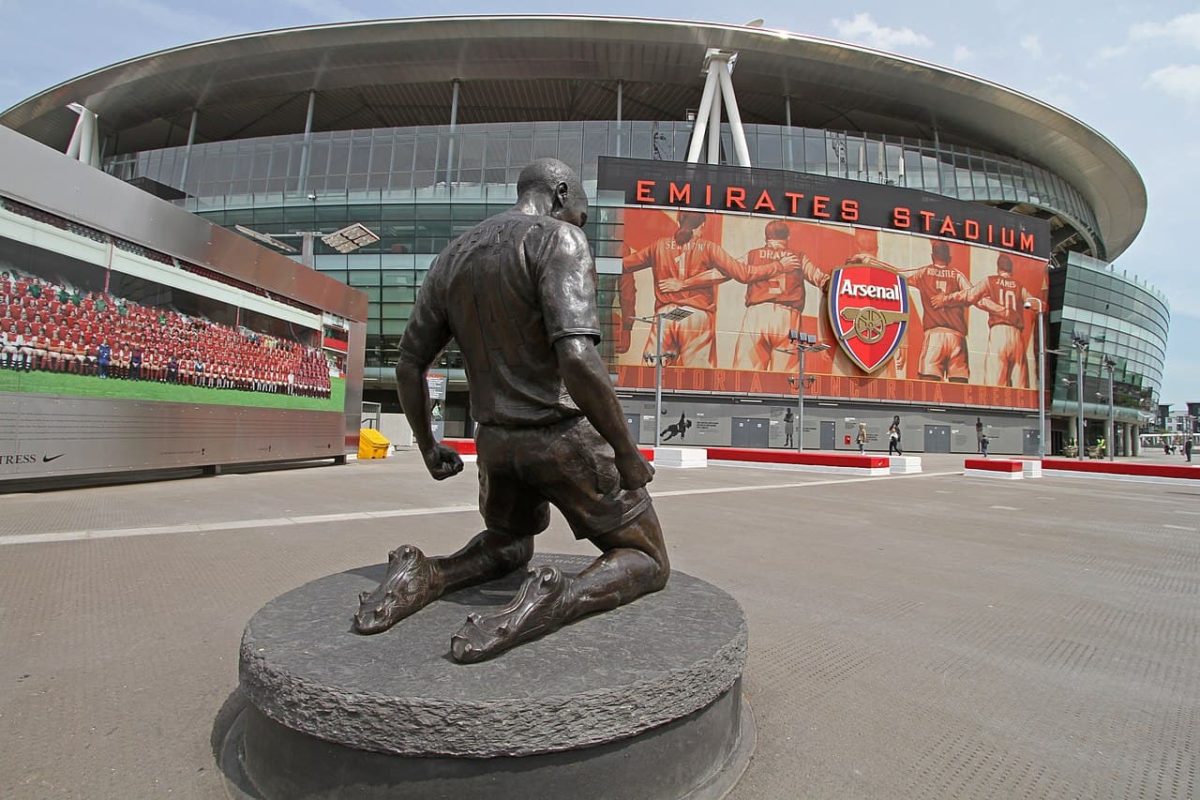
With a grace that transcends the boundaries of mere athleticism, and a mastery of the beautiful game. A game that has mesmerized audiences around the globe, Thierry Henry stands as one of football’s true legends.
Born on August 17, 1977, in Les Ulis, France. His journey from the streets of Paris to the pinnacle of world football is a narrative woven with skill, passion, and a touch of brilliance.
Early Life and Emergence
Thierry Henry’s journey into football began in the gritty suburbs of Paris. Raised in Les Ulis, an area known for its reputation for social challenges. A young Thierry Henry navigated the complexities of urban life. He honed his skills on the concrete pitches of his neighbourhood. It was here that his talent caught the eye of local scouts. Earning him a spot in the esteemed Clairefontaine academy.
His early days at Clairefontaine were marked by rapid development and a growing reputation as a prodigious talent. A swift and skilful winger, Henry showcased his flair in the 1994 UEFA European Under-17 Championship, where he played a pivotal role in France’s triumph. His performances garnered attention, leading to a move across the English Channel to join Arsenal’s youth academy.
Thierry Henry’s Arsenal Years
Thierry Henry’s arrival at Arsenal in 1999 marked the beginning of a transformative era for both the player and the club. Under the guidance of Arsène Wenger, a fellow Frenchman. Henry’s position on the pitch shifted from the wing to a central striker. This tactical tweak proved to be a stroke of genius. Henry seamlessly adapted to the role, becoming one of the most prolific forwards in the history of the English Premier League.
His inaugural season at Arsenal set the tone for what was to come. The 1999-2000 campaign saw Henry score 26 goals in all competitions. He provided a glimpse of the goal-scoring prowess that would define his career. The subsequent seasons witnessed a display of skill, speed, and clinical finishing that left defenders bewildered and fans in awe.
The 2003-2004 season, often referred to as “The Invincibles” season, stands as a crowning achievement in both Henry’s and Arsenal’s history. Henry spearheaded an attack that went unbeaten in the league, securing the Premier League title with style. His contribution to this historic campaign was immense, as he netted 30 league goals and provided a myriad of assists, solidifying his status as one of the world’s elite forwards.
International Success and Challenges
Thierry Henry’s impact was not confined to club football; he was a key figure in the French national team during one of its most successful periods. His international career reached its peak in 1998 when France hosted and won the FIFA World Cup.
Thierry Henry’s presence and contributions showcased his ability to perform on the biggest stage.
The subsequent years saw Henry don the French jersey in multiple European Championships and World Cups. His influence extended beyond goals, as he assumed a leadership role and became a symbol of French football’s identity. However, international success came with its share of heartbreak, notably in the 2006 World Cup final where France narrowly lost to Italy in a penalty shootout.
Barcelona Interlude
In 2007, after a distinguished Arsenal career, Henry sought a new challenge and moved to Barcelona. Joining forces with stars like Lionel Messi and Xavi Hernández, Henry became an integral part of a team that played football with an artistry rarely witnessed. In his debut season, Barcelona secured a historic treble, winning La Liga, the Copa del Rey, and the UEFA Champions League.
While his time at Barcelona was relatively short compared to his Arsenal tenure, Henry’s impact was profound. His ability to seamlessly integrate into a star-studded lineup highlighted not only his footballing intelligence but also his adaptability to different styles of play.
Thierry Henry’s Arsenal Return and Beyond
Henry’s love affair with Arsenal endured, and in a fairy-tale twist, he made a brief return to the club in 2012. Despite being in the twilight of his playing career, his influence on and off the pitch remained undiminished. A memorable goal against Leeds United in the FA Cup was a poetic reminder of his enduring class.
Post-retirement, Henry transitioned into a new phase of his footballing journey. He ventured into coaching, gaining experience with youth development at Arsenal and later accepting managerial roles with AS Monaco and the Montreal Impact in Major League Soccer (MLS). His foray into coaching reflected a desire to impart his knowledge and passion for the game to the next generation of footballers.
Henry’s Legacy and Impact
Thierry Henry’s legacy extends beyond the statistics and trophies. He redefined the role of the modern striker, combining speed, technical finesse, and a killer instinct in front of goal. His celebration, the iconic “Va Va Voom,” became synonymous with moments of sheer brilliance on the field.
Don’t Miss
Off the pitch, Henry’s impact transcended the confines of the football stadium. A charismatic and articulate personality, he became a cultural icon, representing the intersection of sports and popular culture. His influence reached far beyond football, contributing to the diversification and globalization of the sport.
His willingness to speak out on societal issues reflects a commitment to using his platform for positive change.
Conclusion
Thierry Henry’s journey from the streets of Les Ulis to the summits of footballing greatness is a tale of perseverance, talent, and reinvention.
Dazzling spectators with his mesmerizing skills, leading teams to historic victories or championing social causes, Henry’s impact extends far beyond the boundaries of the pitch.
As a footballing maestro and cultural icon, his legacy continues to inspire future generations and remains an integral part of the rich tapestry of football history.
One of greatest to ever play for Arsenal IMO.
Thierry Henry was a force.
The partnership of Henry and Bergkamp was a problem for many world class defenders.