
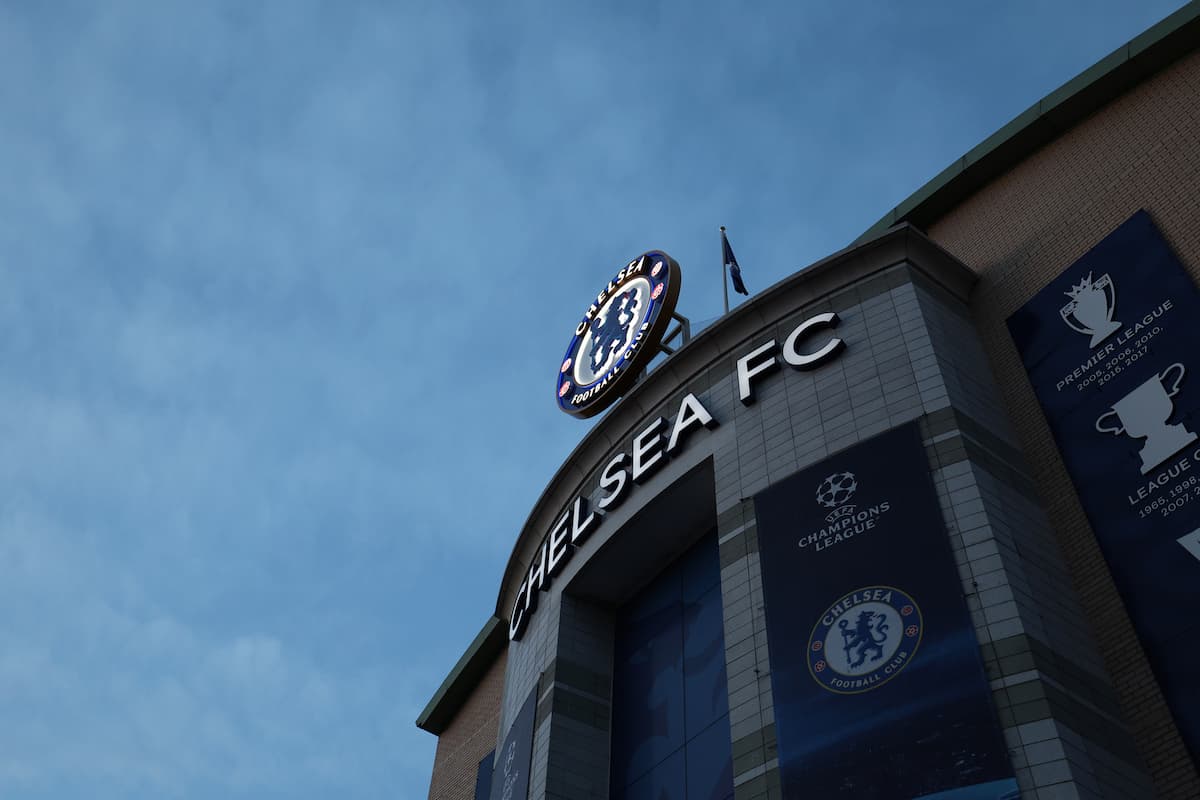
After Enzo Maresca’s cryptic “48 hours” comment on his worst moments at the club, his sudden mutual departure with Chelsea revealed the club’s continuous turmoil.
Since the £4.25 billion 2022 takeover, BlueCo owners Behdad Eghbali and Todd Boehly have pursued a revolutionary model: signing young talent on 5+ year contracts, low wages and demanding managers work within a rigid structure – focusing purely on getting the best out of what’s given.
Eghbali’s earlier comments that Chelsea were “Not terribly well managed on the football side, sporting side or promotional side” signified their break from Chelsea’s past short-termism.
Yet in their 4th year, they have had four permanent managers. There’s a severe disconnect between their long-term strategy and execution. What exactly is happening?
Maresca’s resignation
Maresca’s resignation is the most controversial managerial exit since Thomas Tuchel in 2022. While officially a mutual agreement, widespread reports cite a deteriorating relationship with the hierarchy, particularly with Eghbali.
The core conflict was philosophical. Enzo Maresca reportedly felt pressured into playing certain players to retain their value, and frustrated by the board’s overwhelming control over transfers and squad planning. Notably, his summer declaration for an experienced centre-back was met with two young wingers – Garnacho and Gittens – a position that was not deemed urgent.
Chelsea’s main issue this season is their defence, but Blueco’s rigid adherence to young players means older players are avoided because of their lower resale value and typically higher wages.
The resignation especially shocked fans because Maresca has been BlueCo’s most successful manager, having won the Conference League and the Club World Cup, making Chelsea the only club to win every trophy available to them. Chelsea fans were the most optimistic for the next season, but a lacklustre transfer window, injuries to key players and a depressing December have killed all title hopes.
Statistically, Maresca’s points per game since December 2024 were 1.74, the 3rd-lowest of a Chelsea manager since 2003, only bested by Mauricio Pochettino (1.66) and Frank Lampard (1.52). Yet his overall win rate of 59.8% is second-best, only behind Tuchel in the BlueCo era. This duality reflects fan sentiment: While frustrated by his tactics – evidenced by “You don’t know what you’re doing” chants in his last game – many do believe that Maresca, like his predecessors, has been hampered by Blueco’s heavy-handed structure.
Blueco’s transfer policy
BlueCo’s rigid structure rests on a strict separation of powers: managers are hired to coach, not to dictate transfers. To ensure that the club isn’t overly reliant on a coach that’s susceptible to leaving, like Manchester United post-Ferguson.
At its core, Blueco’s youth-centric recruitment is a high-risk, high-reward system. Successes like Cole Palmer, Moises Caicedo, Marc Cucurella and Enzo Fernandez – young, talented and on cost-controlled contracts- validate their vision. However, Egbhali’s “obsession” with player trading has its downsides.
Critically, sporting directors Paul Winstanley and Laurence Stewart have repeatedly misidentified squad needs to stick to their model. Since Diego Costa, Chelsea have cycled through veterans (Aubameyang, Nkunku) and prospects (Jackson, Delap), failing to secure a prolific striker that fans desired, like Victor Osimhen.
Additionally, issues arise with expensive, injury-prone signings or those made for a specific manager who falls out with the current one, and a ruthless focus on balance sheets for returns on investment. £47.5 million Raheem Sterling, £88 million Mykhailo Mudryk, £55 million Romeo Lavia and £ 38 million Axel Disasi are examples of this.
Chelsea have generated over 600 million euros in sales and shipped over 30 players in 4 years, including the entire 2021 Champions League-winning squad, excluding Reece James.
This logic means that homegrown players are more valuable, as they are pure profit. Academy players like Mason Mount and Connor Gallagher, who Pochettino really wanted to keep, and Trevoh Chalobah, who Maresca wanted to stay last season, are transferred for “pure profit” often against managerial wishes.
Blueco’s squad management doesn’t stop there, as it’s common for them to visit the locker room after games – confirmed by both Pochettino and Maresca – adding extra pressure to succeed with limited control. Ultimately, this policy creates an ever-changing squad where financial asset management clashes with on-pitch performance.
Similarities with other managers
The struggle to work within this system is clear for Chelsea’s previous managers. Thomas Tuchel, who was the reigning manager before the takeover, lasted only 100 days—despite BlueCo spending £200 million plus on statement signings like Sterling and esteemed defenders Kalidou Koulibaly, Marc Cucurella, and Wesley Fofana, a poor start to the 2022/23 season – 3 wins in 6 games and a devastating loss in the Champions League – sealed his fate.
Tension rose very quickly between Tuchel and the board, with Tuchel publicly lamenting a preseason “lack of goalscorers” after a heavy loss to Arsenal, stating, “We have the same issues because we have the same players. He also clashed over the proposed signing of Cristiano Ronaldo and resented the removal of key club staff, including Petr Čech.
His successor, Graham Potter, was a highly touted project appointment; the plan was to grow with the young players. But humiliatingly, this was seen as Chelsea’s worst manager in the 21st century.
Potter struggled with handling a massive squad as Chelsea had around 40 players, far more than the standard amount, such that not everyone could change in the locker room. He also came mid-season, with several new signings who came before him; new backroom staff and the expectation of keeping Chelsea afloat amid all this overwhelmed him. Despite a good start, going unbeaten in 9 games with 5 consecutive wins in all competitions, his run from November to April was the hallmark of his failures. They had only 28 points in 22 games, and an embarrassing run of 1 goal scored from January to March.
Pochettino was the 3rd permanent manager and was known for developing young players and working within a limited transfer budget. He only lasted a year into his 2-year contract.
Despite a tremendous end to the season to finish 6th – the 3rd best form after Christmas, only bested by Manchester City and Arsenal – and reaching the Carabao Cup final, Chelsea ultimately fell short of playing the Champions League next year.
They left by mutual consent, and this was the most amicable resignation. His departure, though termed mutual agreement, was influenced by a desire for more transfer influence, a point underscored by the board’s sale of his integral midfielder, Conor Gallagher, against his wishes.
The commonality is clear: regardless of status or tactics, each manager found their authority undermined by the ownership’s top-down interference in football operations, which they ultimately couldn’t work with. The board makes it clear, before signing them, that this is how they operate.
The verdict
Overall, the evidence presents a stark conclusion. BlueCo’s project to revolutionise Chelsea is fundamentally flawed, not in its long-term vision, but in its execution. Losing four managers due to repeated conflicts with a rigid, financially-driven structure proves the model is unsustainable.
Something is missing between the board’s strategy and the practical needs of a winning football team. Until the owners lessen their focus on player trading in favour of managerial trust and squad cohesion, Chelsea will remain a club in perpetual transition.
Chelsea are the worse run premier league team