
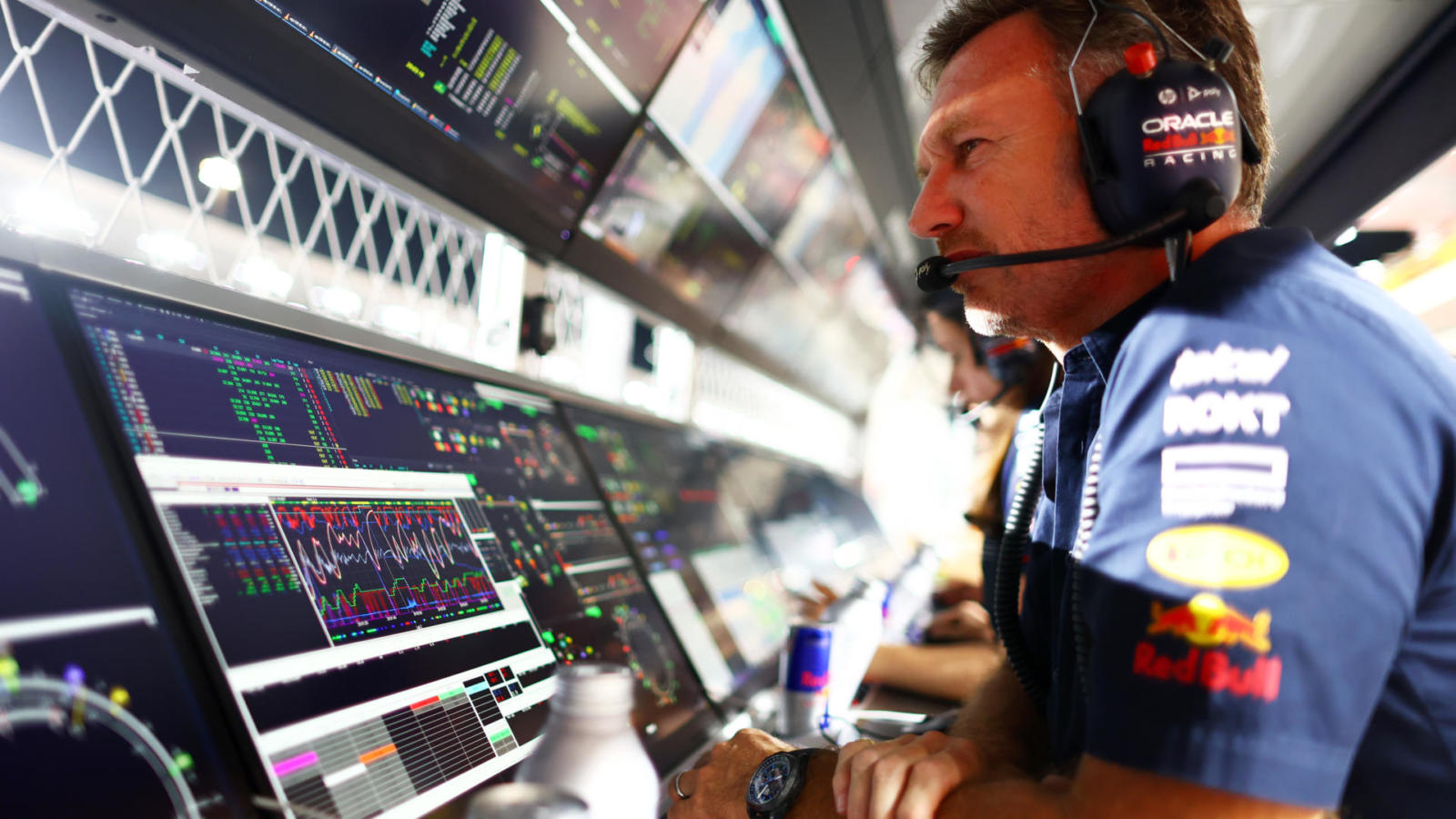
In the high-octane world of Formula 1, the pit wall is not just a physical barrier separating the team’s strategists from the race track; it is the heartbeat of where crucial decisions are made, strategies are critically executed, and races can be won or lost. The role of the F1 team pit wall embodies a complex blend of speed and strategy, where every decision impacts the delicate balance between aggressive racing and tactical conservatism.
Who is on the Pit Wall
The pit wall is typically staffed by an ensemble of the team’s top strategists and if we take a look at Red Bull’s Pit Wall, the following ensemble of personnel includes:
- Jonathan Wheatley – Sporting Director
- Adrian Newey – Chief Technical Officer
- Christian Horner – Team Principal
- Hannah Schmitz – Senior Strategy Engineer
- Will Courtenay – Head of Race Strategy
- Guillaume Rocquelin (Rocky) – Head of Race Engineering
- Gianpiero Lambiase (GP) – Race Engineer for Max Verstappen
- High Bird – Race Engineer for Sergio Perez
These individuals are armed with an arsenal of technology and data, constantly monitoring every aspect of the race.
From tracking weather changes to analysing tire degradation and fuel consumption, the team on the pit wall has a bird’s-eye view of the race, with real-time data streaming in from various sensors on the car.
Timing is Everything
One of the most crucial roles of the pit wall is in strategizing pit stops.
The timing and frequency of pit stops are pivotal decisions that can drastically alter the course of the race.
A well-timed pit stop can help a driver avoid traffic, take advantage of fresh tires, or adapt to changing weather conditions.
Conversely, a poorly timed stop can lose precious seconds and positions.
These decisions often require razor-thin margins, demanding a deep understanding of both the car’s performance and the competitors’ strategies.
Communication is Key
Communication is a vital aspect that the pit wall team manages.
Race engineers continuously relay information to the driver, providing updates on race positions, competitor strategies, tire conditions, and potential hazards.
The communication must be concise and timely, ensuring the driver is informed without being overwhelmed.
Allowing them to focus on the demanding task of racing at speeds exceeding 200 mph.
Adaptation is Crucial
The role of the pit wall extends beyond the race day.
It plays a significant part in pre-race preparations, where strategies become forged based on simulations and on-track data from recent years.
These plans, however, are always subject to change.
As the race unfolds, the team on the pit wall must be ready to adapt their strategy in response to unexpected developments like safety car periods, accidents, or sudden weather changes.
Make the Right Call at the Right Time
In the world of Formula 1, where fractions of a second can be the difference between victory and defeat.
The strategic decisions made on the pit wall are as crucial as the driver’s skills on the track.
The pit wall team must harmonize a vast array of information.
Making split-second decisions that could mean the difference between standing on the podium or walking away empty-handed.
Conclusion
In conclusion, the F1 team pit wall is a testament to the intricate interplay of speed and strategy in Formula 1.
It’s a place where technology, data, human judgment, and experience converge to guide some of the fastest racing machines on the planet.
As Formula 1 continues to evolve with new technologies and regulations, the role of the pit wall will only grow in complexity and significance.
Remaining a fundamental component in the quest for racing excellence.
For more Formula 1 news, check out ‘Audi’s Formula 1 Aspirations‘ or check out ‘Guenther Steiner’s Departure from Haas‘
Image Credit: Red Bull Content Pool