
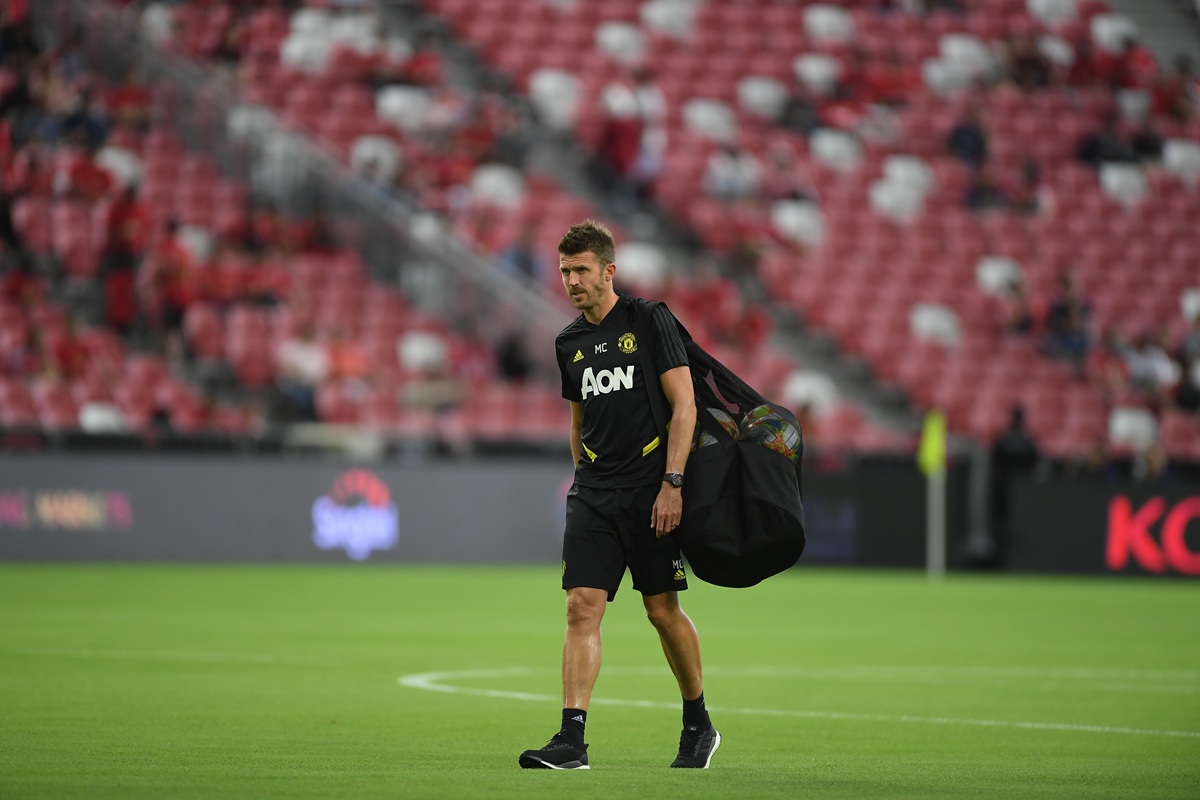
Manchester United’s narrow but thrilling 3-2 victory over Liverpool has done more than just secure bragging rights—it has potentially reshaped the club’s managerial future. In a season defined by instability, pressure, and constant scrutiny, Michael Carrick has quietly but firmly reintroduced a sense of direction at Old Trafford. With that win sealing a Champions League place and completing a notable league double over their fiercest rivals, the case for Carrick’s appointment as permanent manager has grown louder.
For more reaction across the domestic game, follow our latest football coverage. You can also read more on Manchester United and the wider issues that have shaped the club in recent years.
While other young and ambitious candidates continue to be linked with the role, there is a compelling argument that United already have their answer within the building. Carrick’s short spell in charge has steadied the ship, restored attacking identity, and reconnected the squad with the club’s footballing principles. Here are three key reasons why Manchester United should entrust him with the long-term project.
1. Stability and Tactical Clarity After Years of Chaos
Since Sir Alex Ferguson’s retirement, Manchester United have endured a revolving door of managers, each bringing a different philosophy, system, and transfer strategy. The result has been inconsistency, identity confusion, and a squad often built without long-term cohesion. In contrast, Carrick has introduced something United have lacked for over a decade: calm, clarity, and structure.
In his current spell in charge, United have looked noticeably more organised both in and out of possession. The midfield is compact, the pressing triggers are more coordinated, and the team’s transitions are far more purposeful. The 3-2 win over Liverpool highlighted this evolution perfectly, in a game where United had 37% possession, they absorbed pressure when needed but also broke forward with intent and intelligence.
Unlike some previous appointments who attempted sweeping overhauls, Carrick has focused on refining what already exists. He has simplified roles for key players, empowered creativity in the final third, and restored confidence to individuals who previously looked lost, particularly Kobbie Mainoo and Casemiro. The result is a team that feels coherent again rather than reactive.
United’s long-running struggle to get the best out of talented players has also been a major talking point, as explored in our feature on why players leave Manchester United and improve. Carrick’s early work suggests he may be helping to reverse that trend.
Even more importantly, results have followed. The “staggering” run since he assumed control—characterised by improved win rates, stronger performances in big matches, and a clear upward trajectory—suggests this is not just a short-term bounce. It is a structure taking shape.
2. A Manchester United Identity Rooted in Intelligence and Attacking Football
Manchester United’s identity has always been associated with attacking football, brave decision-making, and midfield intelligence. In Michael Carrick, the club has a manager who not only understands that tradition but has lived it at the highest level.
As a player, Carrick was never flashy, but he was the tactical brain of elite teams that dominated English football, such as Tottenham Hotspur and Manchester United. That footballing intelligence is now visible in his management style. Under his guidance, United have begun to control games more effectively, circulating possession with patience while still being incisive in attack.
The win against Liverpool showcased this balance. United did not rely solely on counterattacks or defensive resilience; instead, they built structured attacks through the midfield, rotated positions intelligently, and created high-quality chances through combinations rather than on individual brilliance alone.
Perhaps most importantly, Carrick has made United watchable again. There is an aesthetic quality to their play that fans have been craving for years—quick one-touch passing sequences, overlapping full-backs, and forward players encouraged to express themselves rather than operate under fear.
That attacking tradition has deep roots at Old Trafford, from famous European nights to the historic Man United Treble 1999 season. Carrick’s challenge is to build a modern version of that identity without simply living in the past.
This is not accidental. It reflects a coach who understands spacing, tempo, and rhythm. While some elite managers impose rigid systems, Carrick appears to be building something more organic: a style that suits the club’s DNA and the strengths of its squad.
3. Championship Pedigree, Leadership Calm, and Long-Term Growth Potential
One of the most overlooked aspects of Carrick’s case is his experience of winning at the highest level. During his playing career, he was a central figure in a Manchester United side that dominated English football and reached multiple Champions League finals. That exposure to elite environments matters.
Carrick understands what winning looks like. He understands dressing-room dynamics at a club where pressure is constant, and expectations are non-negotiable. More importantly, he understands the standards required to compete for major trophies—not just qualify for them. In his playing days, he won all the major domestic and European trophies available.
What has stood out in his managerial spell is his composure. Whereas previous managers have appeared overwhelmed by the job’s intensity, Carrick has remained calm and measured. That emotional control has filtered into the squad. Players look freer, more confident, and less burdened by anxiety in key moments.
This is particularly important at Manchester United, where pressure has historically derailed promising projects. Carrick’s presence reduces that noise. He is not attempting to reinvent the club overnight; instead, he is building incrementally, allowing foundations to settle before layering ambition on top.
And the ceiling is significant. If given time, recruitment alignment, and trust from the board, Carrick has the attributes to evolve into a top-tier European coach. His understanding of the game, combined with a growing managerial track record, suggests that what we are seeing now is only the beginning.
The Bigger Picture: Why United Should Back Internal Progress Over External Risk
It is easy to be tempted by external names whenever Manchester United seek a manager. The post-Ferguson era has seen high-profile appointments come and go with varying degrees of failure. From tactical revolutionaries to serial winners from abroad, few have been able to sustain success at Old Trafford.
That context matters. Stability has become more valuable than novelty.
Carrick represents continuity without stagnation. He knows the club, understands its expectations, and is already improving results and performances in real time. Rather than resetting again with another high-profile appointment who needs time to adapt, United have an option already producing evidence of progress.
The 3-2 win over Liverpool was not just a result—it was a statement. A statement that Manchester United can compete at the highest level again, that they can perform under pressure, and that they have a coach capable of guiding them there.
Liverpool’s own uncertain spells under pressure show how quickly momentum can change at elite clubs, as covered in our analysis of Arne Slot’s future after Liverpool’s Champions League exit.
Manchester United now face a familiar crossroads. Do they chase another external name with reputation and risk attached, or do they commit to a manager who has already begun stabilising the club from within?
Michael Carrick may not be the loudest candidate, but his work speaks clearly. Tactical improvement, attacking identity, leadership calm, and immediate results form a compelling case.
In a post-Ferguson landscape filled with false dawns and unfinished projects, Carrick represents something different: continuity with upward momentum. And after a defining win over Liverpool to secure Champions League football, the argument for giving him the job full-time has never been stronger.
Thanks a lot, personally, it shouldn’t be a toss-up between Michael and any other candidate; they should just appoint him and move on.
As usual on point. Time will tell if those reasons resonate with thr board and if they can yield long term results.