
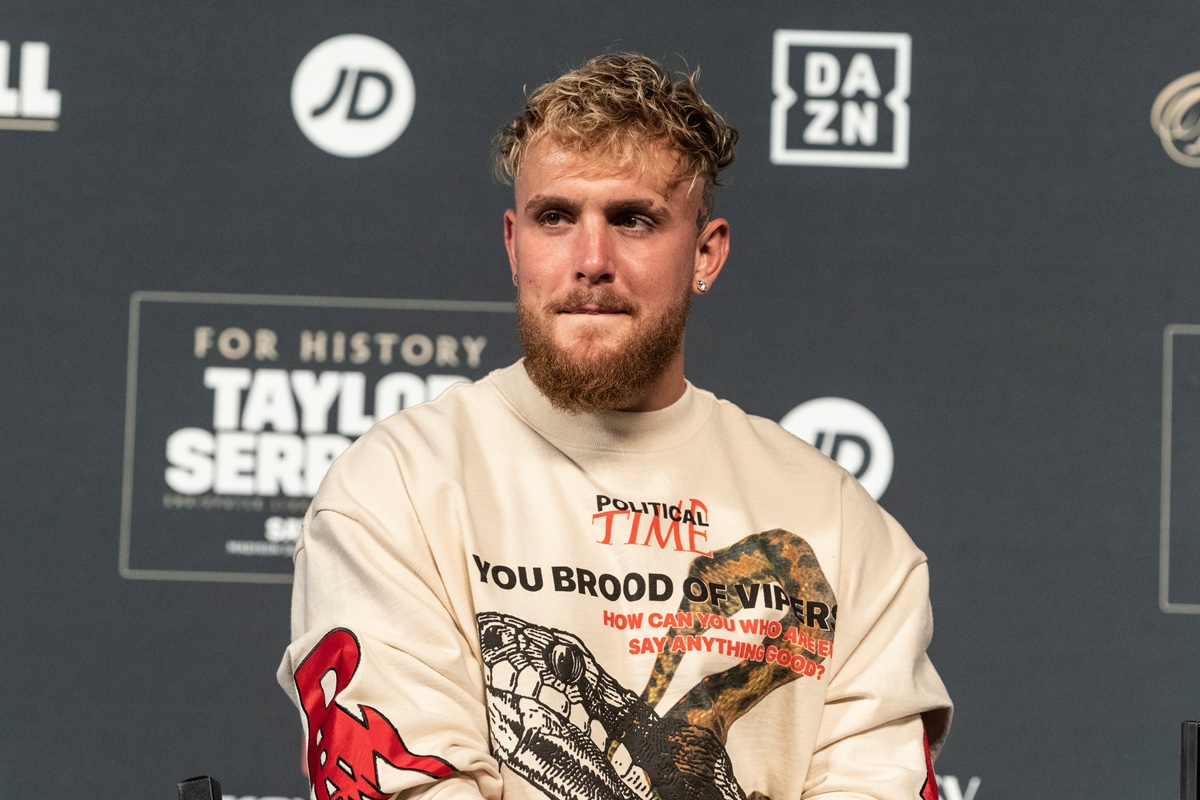
Source: Shutterstock
YouTuber-turned-boxer Jake Paul and former unified heavyweight champion Anthony Joshua will share a boxing ring on Friday, the 19th of December, in a showdown few expected to see. The matchup has already generated massive attention, but behind the spectacle lies a far more uncomfortable debate about safety, legitimacy, and the widening gap between entertainment and elite sport.
Jake Paul VS Anthony Joshua: A Blockbuster Bout with Serious Questions Attached
Paul stands at 6 feet 1 with a 76-inch reach, typically weighing in at 90 kilograms. Joshua, in contrast, stands at 6 feet 6 inches with an 82-inch reach and typically weighs close to 111 kilograms. The size difference alone has raised concerns.
Boxing has long operated under weight-class rules to protect fighters from mismatches. Joshua is naturally around 20 kilograms heavier, significantly taller, considerably more powerful and far more experienced. Fighters are rarely cleared to face opponents with this level of disparity unless both are elite professionals or the bout is under exhibition rules.
It is possible that this fight would never have been sanctioned without Paul’s commercial draw and the financial backing behind the event.
Joshua Shadows Jake Paul in Experience, Power and Proven Quality
Anthony Joshua’s résumé sits at the highest level of the sport. He has faced the best heavyweights of his era, including two bouts with Oleksandr Usyk, the current undisputed champion. Joshua also owns wins over Wladimir Klitschko, Joseph Parker, Alexander Povetkin, and Andy Ruiz Jr. More recently, he defeated Francis Ngannou and Otto Wallin before losing his IBF title to Daniel Dubois.
Joshua is bigger, stronger and vastly more experienced than Paul. The physical and technical gap between them is not just notable; it’s unprecedented.
Jake Paul’s Unorthodox Climb to Heavyweight
By comparison, Paul’s boxing career has been unconventional from the beginning. His record includes wins against retired UFC fighters at cruiserweight. He has beaten Tyron Woodley, Anderson Silva, Nate Diaz and Mike Perry. He also holds a victory over 58-year-old Mike Tyson, a result many criticised because of Tyson’s age.
However, the most relevant fight when assessing Paul’s readiness for Anthony Joshua is his split-decision loss to Tommy Fury. It remains the only time Paul has faced a young, active and trained professional boxer of similar size.
That defeat exposed the limitations of Paul’s skill set. Fury controlled the fight with fundamentals, using his jab and movement to expose Paul’s technical shortcomings. When compared to Joshua’s résumé, the importance of this loss becomes even clearer. Fury is a novice in comparison with Joshua. He lacks elite power, championship experience and world-class skill. If Paul struggled with Fury’s fundamentals, stepping up to face a former unified heavyweight champion represents a jump so vast that many argue it crosses into unsafe territory.
What a Win Would Mean for Each Fighter
The stakes for Paul and Joshua could not be more different from one another.
For Jake Paul, a victory would completely transform his boxing identity. It would redefine him from a celebrity boxer into a legitimate contender and erase most of the scepticism surrounding his career. It would be one of the greatest upsets in modern boxing history and would arguably make him one of the sport’s biggest names overnight.
For Anthony Joshua, the reward is not legacy but global reach and renewed mainstream visibility. A win would give him exposure to a younger, digitally engaged audience. It would also deliver one of the most lucrative paydays of his career and cement him as a crossover superstar. While Paul seeks legitimacy, Joshua seeks momentum, visibility and the financial upside that comes with beating one of the internet’s biggest personalities.
Below you can watch Sky Sport’s breakdown of the fight: