
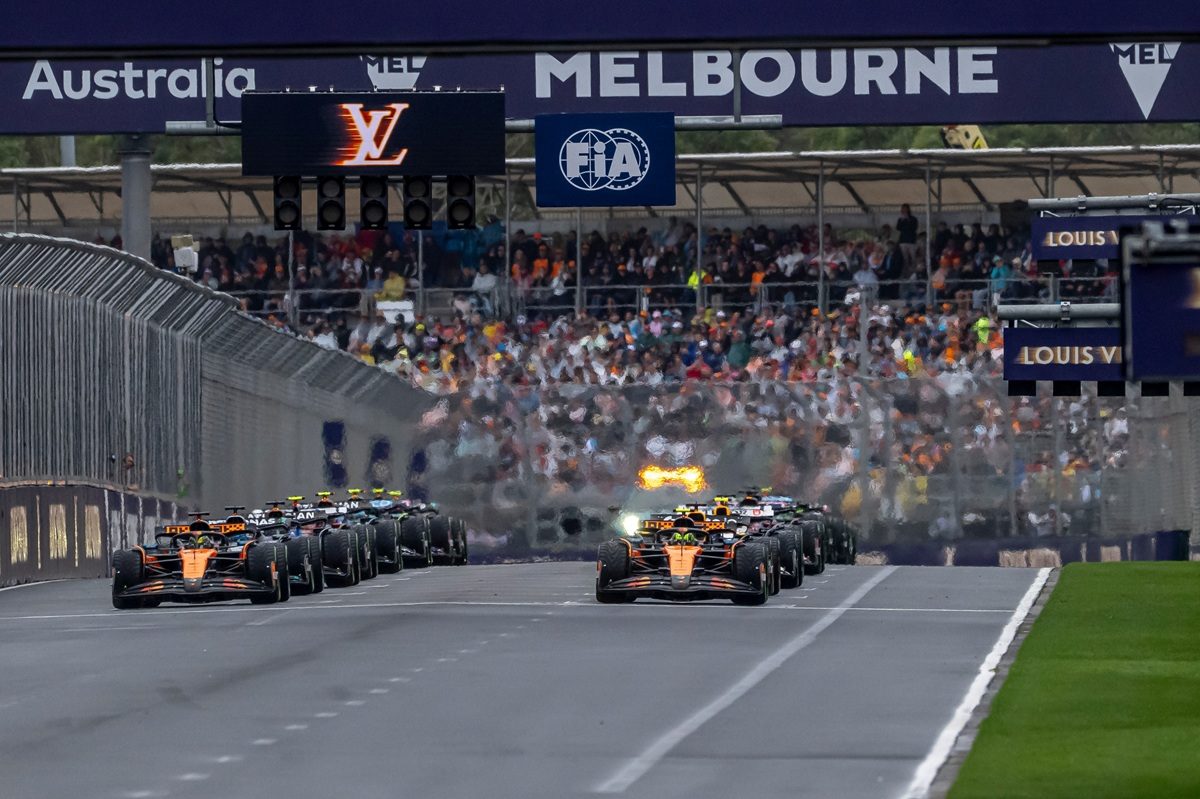
F1 rarely gets a true reset. 2026 looks like one. The cars change. The power units evolve. Team strategies get ripped up and rebuilt. As a result, the early months may feel messy, yet the long-term picture could be electric.
This F1 2026 season preview breaks down what matters most. You will get the key rule shifts, the competitive pressure points, and the storylines that usually decide championships. Just as importantly, we will look at what teams will not say out loud: where the hidden lap time sits, and how quickly it can move.
Two things are also true at once. First, the best organisations still tend to win. Second, regulation changes can punch holes in old advantages. Therefore, a smart midfield team can suddenly look like a front-runner if it nails the first concept.
Let’s get into the new era.
Why 2026 Feels Bigger Than A Normal “New Rules” Year
F1 updates its cars every season. However, 2026 is not a standard update. It is a system change because the sport is pushing several levers at once.
Here is why that matters.
- The chassis direction shifts, so teams must rethink how they create downforce and control drag.
- The aerodynamic tools expand, so cars can behave differently on straights versus corners.
- The power unit emphasis changes, so energy management becomes more central again.
- New or returning manufacturers add pressure, and that can alter the competitive rhythm.
When several major changes land at once, the gap between a good concept and a great one grows. Meanwhile, the gap between a great concept and a flawed concept becomes painful.
That is why the first six races of a regulation era often feel like a spotlight test. You can hide issues in winter testing. You cannot hide them when rivals copy your strengths and expose your weaknesses every Sunday.
The 2026 Car Concept In Plain English
F1 cars win lap time in a few core places: corner speed, traction, braking stability, and straight-line efficiency. In 2026, teams still chase those same goals. The difference is how they get there.
The new approach aims to make cars more agile and efficient. That typically means careful control of weight, clever airflow, and stable behaviour in traffic. It also means teams will spend a lot of time balancing two conflicting needs.
- You want downforce for corners.
- You want low drag for straights.
In past eras, teams often chased peak corner grip and then accepted the drag penalty. In 2026, the incentives lean harder towards efficiency. As a result, you may see cars that look simpler in some areas, yet far more advanced in how they switch modes across the lap.
That switching is a theme we will return to, because it could decide who wins close races.
Active Aerodynamics Could Become The New Battleground
Active aerodynamics is one of the headline ideas for 2026. Put simply, the car can run different aero states depending on the situation. That means a team can prioritise cornering grip in one phase, then reduce drag in another.
This matters for three reasons.
First, it changes how overtaking works. If a car can shed drag efficiently, it can defend on straights without ruining its tyres in corners. On the other hand, if a chasing car can shift into a lower-drag state at the right time, it can complete moves more cleanly.
Second, it changes the car set-up. A stable aero platform becomes vital because switching modes cannot create surprise snaps. Therefore, mechanical balance and suspension control will matter as much as raw downforce.
Third, it changes the direction of development. Teams will chase the best “mode change” behaviour. They will also chase the cleanest airflow when running close behind another car. That is a tough combo, so some early designs will inevitably miss the mark.
Watch for this early-season signal: which cars look calm when they switch state at speed. The calm car usually becomes the fast car by mid-season.
The Power Unit Shift And Why It Could Reward Smarter Race Craft
Power units for 2026 bring a new blend of performance targets and energy focus. Even if you do not love the technical detail, you should care about the on-track effect.
If electrical deployment and energy recovery play a larger role, then drivers and engineers have more levers to pull. That creates a few likely outcomes.
- Qualifying gaps could tighten when deployment maps converge.
- Race pace could swing more based on energy strategy and traffic.
- Some tracks could become “energy tracks” where management beats aggression.
In other words, we may see a season in which the sharpest race teams steal points more often. That is great for viewers, yet brutal for teams that rely on one-lap pace alone.
Also, when energy matters more, mistakes get punished faster. A sloppy out-lap can ruin a qualifying attempt. A bad deployment call can cost you track position in one straight. Therefore, expect the top pit walls to earn their reputations all over again.
Sustainable Fuels And The Quiet Performance Race Behind The Scenes
Sustainable fuel is not just a marketing line. It can influence performance, reliability, and how teams calibrate engines across varying conditions.
Fuel behaviour affects combustion. It affects temperatures. It affects how sensitive an engine is to changes in air density, humidity, and heat. So, while the public story is sustainability, the competitive story is tuning and consistency.
Teams will not frame it this way in interviews. However, you will hear phrases like “driveability” and “deployment smoothness”. When those words appear, fuel and calibration are usually part of the puzzle.
This part of the battle is also hard for fans to see. Yet it shows up in lap time when one car launches better, manages traction better, and keeps tyre temperatures in the sweet spot.
What The Best Teams Usually Get Right In A Regulation Reset
Regulation eras reward a specific type of excellence. It is not always the team with the best superstar driver, although that helps. It is usually the team with the best system.
Here are the system traits that win these seasons.
Fast learning loops
A great team fails quickly in testing, then fixes quickly. It does not hide problems. It measures them.
Correlation discipline
If your wind tunnel says one thing and the track says another, you lose months. Therefore, correlation is not a technical buzzword. It is a title-winning advantage.
Packaging clarity
The fastest car is often the one with the cleanest packaging, because it controls temperatures and airflow with fewer compromises. Meanwhile, messy packaging creates knock-on problems everywhere.
Upgrade accuracy
In a reset year, upgrades are expensive in time and budget. You cannot afford “maybe gains”. You need real gains. So, the best teams bring fewer updates, but each one works.
If you want a simple prediction method for 2026, use this: back the teams with great process, not just great headlines.
The 2026 Grid Storylines That Could Define The Season
Every preview needs a few big story hooks. However, the strongest storylines are the ones tied to competitive mechanics. Here are the ones that should matter most.
Who nails the first car concept?
The first car sets the baseline. If it is good, upgrades make it great. If it is flawed, upgrades often become patchwork.
Expect early surprises. A team that qualifies well in round one might fade by round six if it cannot develop. Conversely, a team that starts slowly can surge if its concept is sound and it understands why it is slow.
The new manufacturer spotlight
When new manufacturers enter or scale up, the spotlight is intense. Reliability becomes a headline. So does any rumour about power deficits.
This pressure can also change team behaviour. Engineers may choose safer settings early, then unlock performance later. Therefore, some early results can mislead.
Driver adaptability becomes a weapon
New cars demand new habits. Braking points shift. Corner entry behaviour changes. Energy systems change the rhythm of a lap.
Drivers who adapt quickly can bank points while rivals catch up. That matters because points earned early are worth the same as points earned late.
The midfield could become a knife fight
If the top team advantage shrinks, then the midfield gets denser. As a result, qualifying becomes chaotic, strategy becomes bolder, and a single safety car can reshuffle the top 10.
That is when opportunists thrive. It is also when errors multiply.
How To Watch The First Three Races Like An Insider
If you only watch lap times, you miss the story. Instead, look for performance “tells” that predict the next ten races.
Straight-line speed with no tyre pain
A fast car on the straight that still looks planted in high-speed corners has a strong aero efficiency base. That is gold in 2026.
Calm behaviour in dirty air
If a car follows closely without sliding, it will race well. Therefore, it will score consistently even if it is not the fastest in clean air.
Consistent deployment patterns
Watch whether a car defends easily on the straight. If it does, it likely has strong energy deployment or good drag reduction. That can turn an average race into a podium.
Upgrade confidence
Teams that talk about upgrades with certainty tend to have a good correlation. Teams that sound vague often have correlation headaches. It is not always true, but it is a useful clue.
After race three, you will usually know who has a real concept and who has a temporary spike.
Key Tracks That Could Expose The 2026 Winners
Not all circuits test the same strengths. Some reward power. Some reward aero. Some punish tyres. In 2026, the most revealing tracks should be the ones that force teams to balance efficiency and stability.
Here are the circuit “types” that may matter most.
High-speed efficiency tracks
These tracks punish drag and reward stable aero. If active aero works well, you will see it here.
Stop-start traction tracks
These circuits test deployment, traction, and rear tyre care. If energy management is decisive, these tracks will become pivotal.
Heat and tyre stress tracks
When conditions are extreme, the best-engineered car wins. Cooling, tyre control, and reliability all get tested at once.
You do not need a full calendar list to follow this. You only need to notice the pattern: which team looks strong across different track types, not just one.
Tyres, Temperatures, And The Hidden Championship Inside The Championship
Most titles are decided by tyres as much as they are decided by engines. It is not glamorous. Yet it is real.
When regulations change, tyre behaviour can change too. That can make 2026 a season where tyre temperature windows become the real puzzle.
If one team warms tyres fast without overheating them, it will dominate qualifying and early stints. Meanwhile, a team that struggles to warm tyres can look slow, even if its car is good.
This also affects overtaking. If you cannot bring tyres into the window behind another car, you cannot attack. Therefore, the teams that manage tyre energy will control races even when they do not lead on pure pace.
Look for driver comments like these:
- “We could not switch the tyres on.”
- “We had graining early, then it stabilised.”
- “The balance was fine, but the tyres dropped.”
Those phrases often appear before performance swings in the standings.
Strategy Could Matter More Because The Cars Could Be Closer
Close grids change strategy. In a spread-out field, you can pit into clean air. In a tight field, you pit into traffic.
That leads to a few likely trends.
More undercut and overcut battles
If tyres behave unpredictably, teams will gamble. Some will pit early to find pace. Others will stay out and bank track position.
Safety cars become heavier weapons
In a tight race, a safety car can turn P12 into P6. Therefore, midfield teams will keep options open and react faster.
Two-stop races may return at some venues
If degradation rises or if teams push harder, two stops can become viable again. That creates more chances for mistakes, but it also creates more action.
Put simply, 2026 could reward flexible strategy over rigid plans.
Drivers Under Pressure In 2026 And Why It Feels Different
Drivers always face pressure. However, 2026 pressure has a twist: the cars are new, so reputations can move quickly.
In a stable era, fans know who is fast. In a reset, the narrative can flip because some drivers adapt better to the new handling style.
Here are the pressure points that matter.
New team-mate benchmarks
If a team signs a new driver around the reset, it creates immediate comparison. Whoever adapts first can seize internal control.
Qualifying becomes even more important in a tight field
When cars are close, track position matters. So, the driver who delivers clean Q3 laps gains a real advantage. That becomes a points multiplier across a season.
Mistakes become more costly
In close races, a small error drops you five places. Therefore, consistency becomes as valuable as raw speed.
This is why you should not overreact to one bad weekend. Yet you should respect patterns. If a driver struggles for six races, it usually signals a deeper fit issue with the car.
Teams Most Likely To Surprise In A Reset Year
Surprises happen when preparation meets opportunity. It is not random. It is often the result of a team investing early in the new rules, while others maximise the old era.
Here are the typical “surprise team” traits.
- Stable leadership and clear technical direction
- Strong development tools and correlation
- Clean packaging and reliable operations
- Drivers who adapt quickly and give sharp feedback
If you want a practical way to track surprise potential, follow upgrade effectiveness. A surprise team often brings one early upgrade that works instantly. Then it snowballs.
Also, watch pit stops. In chaotic seasons, sharp pit crews steal points. That is a quiet advantage, yet it can be decisive in the midfield fight.
The Business And Politics Angle That Fans Feel On Track
F1 is a sport, but it is also a business. In a new era, politics often intensify.
Why? Because the first concept winner sets the tone. Rivals then push for clarifications, technical directives, and reinterpretations.
That does not always mean cheating. Often, it means exploiting grey areas. The sport then responds with guidance.
So, expect a familiar rhythm:
- A team finds an advantage.
- Others copy it or challenge it.
- The rule-makers clarify.
- The advantage shrinks or evolves.
This cycle can shape the competitive order. Therefore, the “fastest car” in April is not always the “best car” in August.
Predictions Without Guesswork: What Is Most Likely To Happen In 2026
It is tempting to name a champion in March. However, the smarter move is to predict the season’s shape.
Here are the most likely outcomes based on how regulation eras usually play out.
The first half will include at least one false signal
A team may look strong early because it understands its tyres or because a track suits its concept. Then the field adapts.
Reliability will decide several races
New power units and new aero systems increase the number of failure points. Therefore, finishing races becomes a competitive skill again.
Development pace will matter more than launch performance
A good launch gives you points. A great development curve gives you titles.
The midfield will steal podiums more often
If the front compresses even slightly, then a perfect strategy plus a safety car can create surprise podiums.
Those trends are not guaranteed, yet they are the safest bets for a reset year.
What To Expect From The Fan Experience In 2026
From a fan point of view, 2026 should feel different in a good way.
You may see closer racing because cars aim to behave better in traffic. You may also see more variety in winners early on, because teams interpret the rules differently at first.
At the same time, there is a realistic chance the first few races feel uneven. That is normal. A new era needs time to settle. Then the chess match begins.
If you want extra calendar context beyond 2026, you can also explore Portimão’s reported return.
Also, if you enjoy how the grid forms and shifts, this older piece on line-ups and team direction is a useful background.
The One Thing That Could Decide The Title
Most titles come down to one repeating advantage. In 2026, that advantage may be efficiency across modes.
If a team creates a car that is quick in corners, low-drag on straights, stable in dirty air, and gentle on tyres, it will dominate. That sounds obvious. Yet it is rare.
The teams that get close will win the big points. The teams that miss one part of the puzzle will chase all season.
So, when the season starts, do not only ask “who is fastest”. Ask “who is fastest in the most situations”. That is how you spot the champion before the standings make it obvious.
Quick FAQ For The F1 2026 Season Preview Search Intent
Is 2026 a full reset for Formula 1?
Yes. The 2026 rules reshape the cars and power units, so teams must build new concepts rather than evolve old ones.
Will 2026 create closer racing?
It aims to. However, the real outcome depends on how teams interpret the rules and how quickly the field converges.
What should I watch in the first races?
Look for calm handling, strong straight-line efficiency, good tyre control, and clean racing in traffic. Those traits usually predict long-term strength.
Final Word: Why 2026 Could Reward The Brave
F1 loves perfection. Yet regulation resets reward bravery, too.
Teams must choose a concept and commit to it. Drivers must adapt quickly and stay calm in chaos. Pit walls must make sharper calls because gaps may be smaller.
That mix is why the F1 2026 season preview feels so exciting. It is not just a new season. It is a new logic.
And when the logic changes, the sport often gives us the best kind of drama: the kind nobody can script.