
















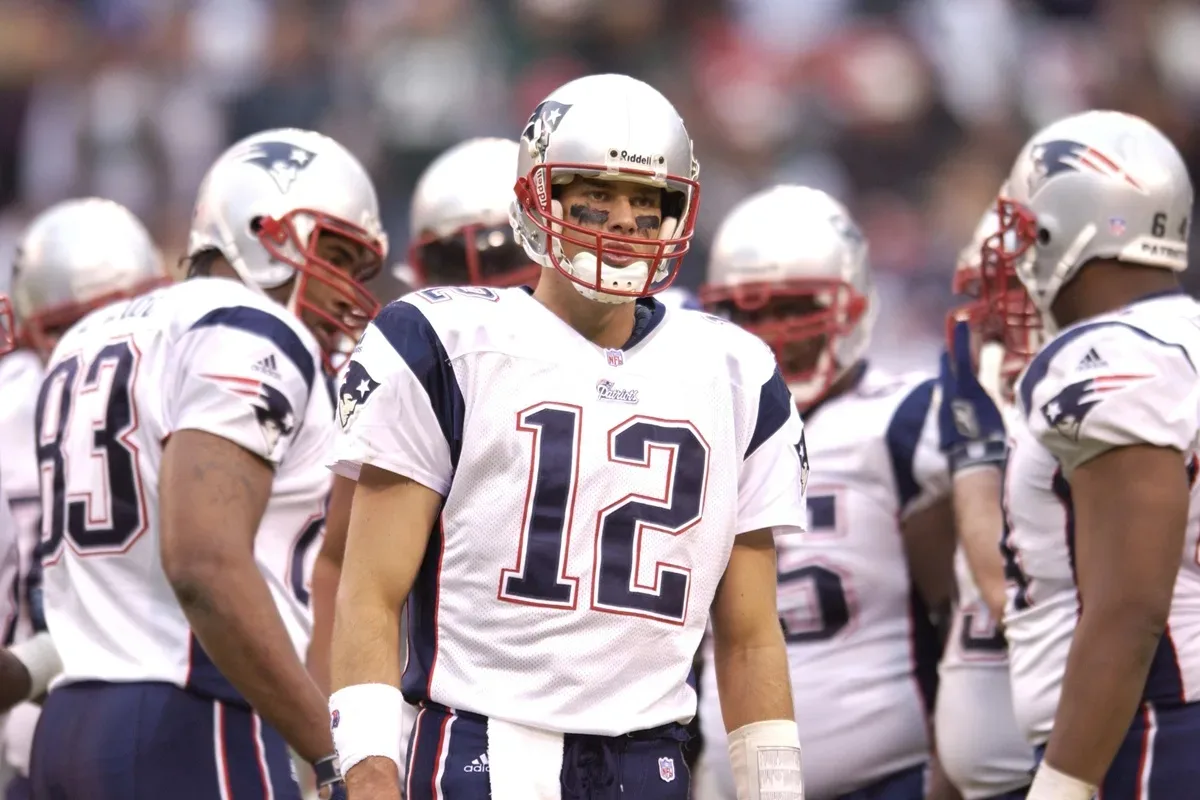
Tom Brady is the greatest NFL quarterback of all time, according to World in Sport’s ranking, with Joe Montana, Peyton Manning and Patrick Mahomes completing the top four.
Brady’s seven Super Bowl victories, five Super Bowl MVP awards and unmatched career passing records provide the strongest overall case. However, ranking the greatest quarterbacks in NFL history involves more than counting championships.
Montana never lost a Super Bowl. Manning won a record five Associated Press NFL MVP awards. Meanwhile, Mahomes has established himself among the game’s finest quarterbacks while still competing at the highest level.
Earlier generations also deserve recognition. Johnny Unitas helped transform the passing game, Otto Graham dominated professional football before the Super Bowl era and Dan Marino produced statistics that seemed impossible during the 1980s.
World in Sport has ranked the 15 greatest NFL quarterbacks based on individual ability, career achievements, performances in major games, longevity and influence on the sport.
How we ranked the greatest NFL quarterbacks
Quarterbacks influence almost every attacking possession. They read defensive formations, make decisions before the snap and attempt to move their teams downfield.
However, their performances depend on the quality of their offensive lines, receivers, coaching and defence.
Our NFL positions explained guide examines the quarterback’s responsibilities and how the position fits into an NFL offence.
For this ranking, five factors carry particular importance:
- Individual performance, including passing ability, accuracy and decision-making.
- Career achievements, including MVP awards and statistical records.
- Postseason performances and championship success.
- Longevity and consistency across different seasons.
- Influence on the development of NFL quarterback play.
Statistics also need historical context. Modern quarterbacks benefit from different passing rules, offensive systems and season lengths.
A quarterback who threw 25 touchdown passes in the 1960s could have been just as dominant relative to his competition as a modern player recording 40.
The Pro Football Hall of Fame’s historical passing records provide a useful comparison, although career totals alone cannot establish greatness.
1. Tom Brady – New England Patriots and Tampa Bay Buccaneers
Tom Brady occupies first place because no quarterback combines sustained success, postseason excellence and career production quite as convincingly.
The New England Patriots selected Brady with the 199th overall pick in the 2000 NFL Draft. He subsequently transformed an unexpected opportunity into one of professional sports’ most successful careers.
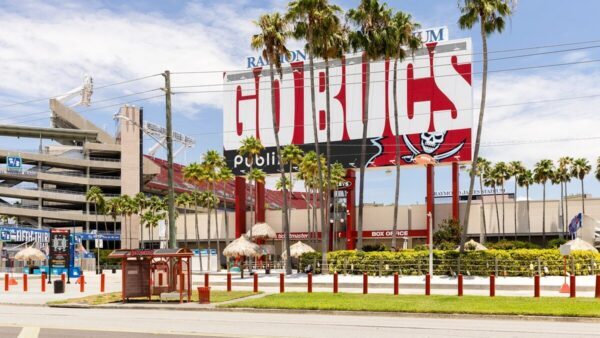
Brady won six Super Bowls with New England before adding a seventh with the Tampa Bay Buccaneers following the 2020 season.
His career achievements include:
- Seven Super Bowl championships.
- Five Super Bowl MVP awards.
- Three regular-season NFL MVP awards.
- 89,214 regular-season passing yards.
- 649 regular-season touchdown passes.
His 23-season NFL career ended after the 2022 campaign.
Brady was not the most athletic quarterback of his generation. His strengths came from preparation, defensive recognition, accuracy and the ability to make quick decisions.
He remained effective as offensive systems evolved and continued competing against younger generations of quarterbacks.
Super Bowl LI against the Atlanta Falcons perhaps best illustrated his determination. New England recovered from a 28–3 deficit to win 34–28 in overtime.
His final championship with Tampa Bay also demonstrated that his success did not depend entirely on the Patriots’ organisation.
Brady’s combination of seven championships and outstanding longevity makes him World in Sport’s greatest quarterback.
Embed from Getty Images2. Joe Montana – San Francisco 49ers and Kansas City Chiefs
Joe Montana remains Brady’s strongest historical rival when evaluating championship performances.
Montana led the San Francisco 49ers to four Super Bowl victories during the 1980s. He earned three Super Bowl MVP awards and never lost the championship game.
His Super Bowl passing record was exceptional. Across four appearances, Montana threw 11 touchdown passes without an interception.
Unlike quarterbacks who relied primarily on arm strength, Montana excelled through timing, precision and composure.
He became the central figure in Bill Walsh’s West Coast offence, which emphasised accurate, shorter passes and intelligent movement.
Montana’s most famous moment came in Super Bowl XXIII against the Cincinnati Bengals.
With San Francisco trailing late in the fourth quarter, he directed a 92-yard touchdown drive. His pass to John Taylor secured a 20–16 victory.
Montana also won two regular-season MVP awards and finished his career with 40,551 passing yards.
His final seasons with the Kansas City Chiefs demonstrated that his ability to lead successful teams extended beyond San Francisco.
Montana sits second because Brady ultimately surpassed him in championships and longevity. However, Montana’s four Super Bowl victories without defeat remain a remarkable achievement.
3. Peyton Manning – Indianapolis Colts and Denver Broncos
Peyton Manning changed expectations of what a quarterback could control before the snap.
His understanding of defensive formations, coverage schemes and offensive adjustments made him one of the NFL’s most sophisticated players.
Manning won five regular-season MVP awards, more than any other player in league history.
He also became a two-time Super Bowl champion, winning with the Indianapolis Colts following the 2006 season and the Denver Broncos following the 2015 campaign.
His passing statistics underline his consistency.
Manning finished with 71,940 passing yards and 539 touchdown passes.
His finest statistical season came in 2013, when he threw for 5,477 yards and 55 touchdowns with Denver. Both totals established NFL single-season records.
Yet Manning’s influence extended beyond numerical achievements.
He frequently identified defensive intentions before the snap and adjusted plays accordingly. His preparation allowed him to attack weaknesses that other quarterbacks struggled to recognise.
Critics can point towards his uneven postseason performances compared with Brady and Montana.
Nevertheless, Manning’s five MVP awards, individual dominance and influence on modern offensive strategy justify third place.
4. Patrick Mahomes – Kansas City Chiefs
Patrick Mahomes has already established a compelling case for inclusion among the greatest quarterbacks ever.
The Kansas City Chiefs quarterback combines outstanding passing ability with mobility, improvisation and an ability to perform under postseason pressure.
Mahomes has won three Super Bowls and earned three Super Bowl MVP awards.
He also collected regular-season MVP honours in 2018 and 2022.
His first championship came following the 2019 season. Kansas City subsequently won consecutive Super Bowls following the 2022 and 2023 campaigns.
In Super Bowl LVIII, Mahomes delivered the decisive touchdown pass to Mecole Hardman in overtime as the Chiefs defeated San Francisco 25–22.
The NFL’s account of Mahomes’ third Super Bowl MVP documented another defining championship performance.
His achievements are particularly impressive because of how quickly he accumulated them.
Mahomes also offers a different style from Brady and Manning.
He can throw accurately from unusual positions, escape pressure and extend plays without abandoning downfield passing opportunities.
Those abilities have made Kansas City’s attack difficult to defend.
The Chiefs’ defeat against Philadelphia in Super Bowl LIX showed that even Mahomes cannot overcome every defensive challenge.
However, his overall championship record and individual accomplishments place him firmly among the elite.
At fourth, Mahomes remains the highest-ranked active player on this list. His eventual position will depend on how his career develops.
Embed from Getty Images5. Johnny Unitas – Baltimore Colts and San Diego Chargers
Johnny Unitas helped establish the modern quarterback as the central figure in an NFL offence.
During the 1950s and 1960s, passing attacks were considerably different from those used today.
Nevertheless, Unitas consistently demonstrated the accuracy, timing and confidence associated with the game’s greatest quarterbacks.
He won three NFL championships, including Super Bowl V and earned three regular-season MVP awards.
Unitas also threw a touchdown pass in 47 consecutive games between 1956 and 1960.
That record survived for more than half a century before Drew Brees surpassed it.
His performance in the 1958 NFL Championship Game against the New York Giants helped deliver one of American football’s most significant contests.
Baltimore won 23–17 in overtime in a match that contributed to the sport’s growing national popularity.
Unitas retired with 40,239 passing yards and 290 touchdown passes.
His legacy extends beyond statistics.
He demonstrated how an intelligent, confident quarterback could dictate the tempo of a match and reshape an entire team’s attacking approach.
6. Otto Graham – Cleveland Browns
Otto Graham presents one of the strongest cases for ranking a quarterback from the period before the Super Bowl existed.
He played 10 professional seasons between 1946 and 1955 and reached the championship game in every one.
Under Graham, Cleveland won seven professional football championships.
Four came in the All-America Football Conference, while three followed after the Browns joined the NFL in 1950.
The distinction matters because the AAFC was a separate league. Nevertheless, Cleveland’s subsequent NFL success demonstrated that Graham’s achievements were not confined to one competition.
He combined accurate passing with effective running and outstanding leadership.
Graham also benefited from Paul Brown’s advanced coaching methods, but his execution made Cleveland’s system successful.
Modern passing totals cannot adequately measure his contribution.
Instead, his extraordinary record of championship appearances and success relative to his contemporaries places him sixth.
7. Dan Marino – Miami Dolphins
Dan Marino is arguably the greatest NFL quarterback never to win a Super Bowl.
His passing ability transformed expectations of what an offence could achieve during the 1980s.
Marino possessed a remarkably quick release, outstanding arm strength and an ability to identify opportunities before defenders could react.
In 1984, he threw for 5,084 yards and 48 touchdowns.
Both were NFL single-season records at the time.
Those achievements came when passing rules and offensive approaches were far less favourable than they became in later decades.
Marino won the 1984 NFL MVP award and guided Miami to Super Bowl XIX, where the Dolphins lost to Montana’s 49ers.
Despite never winning a championship, Marino finished his career with 61,361 passing yards and 420 touchdown passes.
He spent all 17 of his NFL seasons with Miami.
His place illustrates why championships cannot be the only measurement of quarterback greatness.
Marino’s combination of production, technical ability and influence deserves recognition regardless of his team’s postseason record.
8. Aaron Rodgers – Green Bay Packers
Aaron Rodgers established himself as one of the most efficient and technically accomplished passers in NFL history.
His ability to combine accuracy, arm strength and exceptional ball security distinguished him from many contemporaries.
Rodgers won four regular-season NFL MVP awards during his career with the Green Bay Packers.
He also led Green Bay to victory in Super Bowl XLV against the Pittsburgh Steelers and earned the game’s MVP award.
His 2011 regular season was particularly impressive.
Rodgers threw 45 touchdown passes against just six interceptions and produced a passer rating of 122.5, then an NFL single-season record.
Few quarterbacks have combined aggressive downfield passing with such careful protection of possession.
Rodgers could also throw accurately while moving outside the pocket, creating opportunities when conventional plays broke down.
His comparatively limited championship success prevents him from overtaking the leading names.
However, his individual performances and sustained efficiency establish a convincing top-10 case.
9. Drew Brees – San Diego Chargers and New Orleans Saints
Drew Brees helped transform the New Orleans Saints into consistent contenders.
His arrival in 2006 marked a significant moment for a franchise seeking to rebuild after Hurricane Katrina.
Under head coach Sean Payton, Brees became the central figure in one of the NFL’s most productive passing attacks.
He guided New Orleans to victory over the Indianapolis Colts in Super Bowl XLIV and earned Super Bowl MVP honours.
Brees retired after the 2020 season with 80,358 regular-season passing yards and 571 touchdown passes.
His accuracy was particularly impressive.
Despite lacking the physical dimensions often associated with elite quarterbacks, Brees consistently found passing lanes and delivered accurate throws under pressure.
He also broke Unitas’s record for consecutive regular-season games with a touchdown pass, extending the mark to 54.
Brees ranks below Rodgers because of the latter’s superior collection of MVP awards.
Nevertheless, his remarkable consistency, statistical achievements and contribution to New Orleans football make him one of the game’s defining quarterbacks.
10. Bart Starr – Green Bay Packers
Bart Starr was the quarterback behind Vince Lombardi’s championship-winning Green Bay Packers.
Between the 1961 and 1967 seasons, Starr guided Green Bay to five NFL championships, including victories in the first two Super Bowls.
He earned MVP honours in both Super Bowl I and Super Bowl II.
Starr’s responsibilities differed significantly from those of a modern quarterback.
Green Bay relied on a balanced attack built around running plays, disciplined execution and carefully selected passing opportunities.
Starr excelled because he understood when to take risks and when to protect possession.
His composure became particularly important during the 1967 NFL Championship Game against the Dallas Cowboys, commonly known as the Ice Bowl.
With Green Bay trailing 17–14 in freezing conditions, Starr scored the winning touchdown on a quarterback sneak.
The Packers won 21–17 and subsequently captured Super Bowl II.
Starr’s achievements demonstrate that quarterback greatness does not always require extraordinary passing volume.
His leadership, accuracy and championship record earn him tenth place.
Embed from Getty Images11. John Elway – Denver Broncos
John Elway combined outstanding arm strength with mobility and a reputation for delivering under pressure.
He spent his entire 16-season NFL playing career with the Denver Broncos.
Elway guided Denver to five Super Bowl appearances and eventually won consecutive championships following the 1997 and 1998 seasons.
His success towards the end of his career was particularly significant.
After losing his first three Super Bowl appearances, Elway helped Denver defeat Green Bay in Super Bowl XXXII and Atlanta in Super Bowl XXXIII.
He earned Super Bowl MVP honours in the latter victory.
Elway also won the 1987 regular-season MVP award and finished his career with 51,475 passing yards.
His most famous comeback came during the 1986 AFC Championship Game.
Elway led a 98-yard touchdown drive against the Cleveland Browns to force overtime, with Denver eventually winning 23–20.
His ability to extend plays and recover difficult situations made him one of the most dangerous quarterbacks of his generation.
12. Steve Young – San Francisco 49ers
Steve Young succeeded Joe Montana in San Francisco and established his own exceptional legacy.
Initially regarded as Montana’s understudy, Young became one of the NFL’s most efficient quarterbacks during the 1990s.
He won two regular-season MVP awards and led the 49ers to victory in Super Bowl XXIX.
Young delivered a remarkable performance against the San Diego Chargers, throwing six touchdown passes in a 49–26 victory.
That remains a Super Bowl record.
His achievements were not confined to passing.
Young was an outstanding runner who could escape pressure, gain valuable yards and force defenders to account for multiple threats.
He finished his NFL career with 33,124 passing yards and 4,239 rushing yards.
Young’s blend of efficiency and athleticism anticipated the responsibilities of many modern dual-threat quarterbacks.
His relatively shorter period as an established starter compared with other candidates limits his overall position.
However, at his peak, few quarterbacks were more effective.
13. Brett Favre – Green Bay Packers, New York Jets and Minnesota Vikings
Brett Favre built his reputation through aggressive passing, durability and an extraordinary willingness to take risks.
His career included three consecutive regular-season MVP awards between 1995 and 1997.
Favre also guided Green Bay to victory over the New England Patriots in Super Bowl XXXI.
His longevity was exceptional.
He started 297 consecutive regular-season games, an NFL record and finished with 71,838 passing yards and 508 touchdown passes.
Favre’s style sometimes produced costly interceptions.
However, his ability to generate unexpected plays made him one of the most dangerous quarterbacks of his era.
His influence extended beyond his individual statistics.
Favre helped restore Green Bay’s prominence during the 1990s and remained productive into his late thirties.
His combination of durability, individual honours and championship success warrants inclusion among the top 15.
14. Roger Staubach – Dallas Cowboys
Roger Staubach became one of the most accomplished quarterbacks of the 1970s.
After serving in the United States Navy, he joined the Dallas Cowboys and eventually established himself as their starting quarterback.
Staubach led Dallas to victories in Super Bowls VI and XII.
He also guided the Cowboys to four Super Bowl appearances as a starter.
His career statistics do not match those of modern quarterbacks, partly because he entered professional football relatively late.
However, Staubach excelled at extending plays, avoiding pressure and delivering accurate throws during crucial situations.
He won the 1971 NFL passing title and finished his career with a passer rating of 83.4, the highest recorded at that point.
His reputation for late-game comebacks became an important part of Dallas’s success.
Staubach’s contribution illustrates how leadership and intelligent decision-making can outweigh raw statistical totals.
15. Fran Tarkenton – Minnesota Vikings and New York Giants
Fran Tarkenton helped change how quarterbacks used movement to attack opposing defences.
Before mobile quarterbacks became central to modern offensive strategies, Tarkenton demonstrated how scrambling could create passing opportunities.
He spent 18 NFL seasons with Minnesota and the New York Giants.
Tarkenton led the Vikings to three Super Bowl appearances during the 1970s, although Minnesota lost all three.
He won the 1975 NFL MVP award and retired with 47,003 passing yards and 342 touchdown passes.
Both were NFL career records when he retired.
Tarkenton also accumulated 3,674 rushing yards, an exceptional total for a quarterback of his generation.
His influence extended beyond mobility alone.
He understood how to evade defenders, extend plays and force defensive formations to adapt.
Although his lack of a championship weakens his case against some contemporaries, his innovation and sustained production secure the final position in this ranking.
Which great NFL quarterbacks missed the top 15?
Several outstanding quarterbacks narrowly missed inclusion.
Terry Bradshaw deserves particular consideration after winning four Super Bowls with the Pittsburgh Steelers during the 1970s. His two Super Bowl MVP awards and 1978 regular-season MVP strengthen his case.
Kurt Warner also warrants recognition. He won two regular-season MVP awards, led the St. Louis Rams to victory in Super Bowl XXXIV and later guided the Arizona Cardinals to another championship appearance.
Troy Aikman won three Super Bowls with Dallas, while Jim Kelly directed Buffalo to four consecutive Super Bowl appearances without securing a championship.
Other notable contenders include Warren Moon, Dan Fouts, Ben Roethlisberger and Russell Wilson.
Their achievements highlight the difficulty of comparing quarterbacks across generations.
A player can influence the position without accumulating the largest statistical totals or collecting multiple championships.
Can Patrick Mahomes become the greatest NFL quarterback ever?
Mahomes has the strongest opportunity among active players in this ranking to challenge Brady’s position.
He already possesses three Super Bowl victories, three Super Bowl MVP awards and two regular-season MVP awards.
His combination of passing accuracy, athleticism and improvisation makes him one of the most complete quarterbacks of the modern era.
However, Brady’s seven championships and 23 seasons of exceptional longevity remain substantial advantages.
Mahomes must maintain his performances across many more seasons to build an equally convincing career record.
His future also depends on factors beyond individual ability, including Kansas City’s squad development, coaching and competition within the AFC.
Fans can follow the latest NFL news, results and analysis as the next generation of quarterbacks attempts to build comparable careers.
Who is the greatest NFL quarterback of all time?
Brady remains World in Sport’s leading choice because his accomplishments cover virtually every important measure.
He won more Super Bowls than any other player, maintained elite performance for more than two decades and finished with unprecedented career passing numbers.
Montana offers the strongest argument for championship-game perfection, while Manning’s five MVP awards make him one of the greatest regular-season performers.
Mahomes already belongs in the same discussion, despite having a substantial portion of his career potentially still ahead.
Unitas, Graham and Starr also deserve recognition for dominating earlier versions of professional football when offensive rules, schedules and statistical expectations were different.
The greatest quarterback debate ultimately depends on how much weight fans give championships, individual ability, longevity and historical influence.
For now, Brady holds the strongest overall case. Mahomes has the opportunity to challenge it, while Montana’s undefeated Super Bowl record remains an enduring part of NFL history.
Fan verdict
Who is your greatest NFL quarterback of all time?
Does Tom Brady’s seven-championship record make him the clear choice, or should Joe Montana, Peyton Manning or Patrick Mahomes rank higher?
Share your all-time quarterback rankings and join the discussion with other NFL fans on World in Sport.


Have your say
Join the debate
Share your view with other World in Sport readers below.