

A maximum break is one of snooker’s purest feats. It looks calm, clean and almost simple when the very best players do it. Yet that surface view hides the real truth. A maximum break is not just about potting balls in the right order. It is about solving problems, staying balanced, and controlling emotions as the pressure rises with every shot.
That is why the phrase maximum break still grabs so much attention. Fans know a 147 is special. Players know it is even harder than it looks. And now the subject matters even more, because Ronnie O’Sullivan has pushed the conversation further. On 20 March 2026, at the World Open in Yushan, he made a record-breaking 153 against Ryan Day after a free ball at the start of the frame. It is now the highest officially recorded break in professional snooker, beating the previous 148 set by Jamie Burnett in 2004.
So, what does a maximum break really take? In simple terms, it takes perfect potting, smart cue-ball routes, frame awareness, emotional control and the nerve to keep trusting your technique when the table suddenly feels much smaller. A maximum break is a test of touch and thought as much as talent.
What is a maximum break?
A maximum break usually means 147. A player pots 15 reds, each followed by a black, and then clears the colours in order from yellow to black. It is the highest normal total in a standard frame. However, a free ball can change the maths. That is exactly what happened in O’Sullivan’s 153, where the free ball created an extra scoring chance before the main red-black pattern began.
Even so, most fans still use maximum break as shorthand for snooker’s perfect clearance. The phrase carries weight because the number is tidy, famous and rare. More importantly, the break itself tells a story. Every red opens a new angle. Every black person demands a better position. Every visit deeper into the 70s and 80s turns technique into tension.
That is why a maximum break is both a score and a psychological event. It starts with freedom. It often ends with a battle against your own thoughts.
Potting is only the starting point
People often think a maximum break is mainly a potting test. Potting matters, of course. If a player cannot consistently knock in reds from awkward angles, the chance vanishes fast. Yet potting alone is never enough.
The real challenge is repeating high-quality shots without drift. A player may pot the first four reds nicely. After that, the table starts to ask harder questions. One cannon may leave the cue ball half a yard short. One stun shot may bring the wrong red into play. One thin contact can leave the black tied up or the cue ball too straight.
In other words, a maximum break demands reliable potting under changing conditions. The player must keep seeing the right shot, then deliver it without chasing perfection too early. Great break-builders stay simple at the start. They use natural angles. They avoid forcing the cue ball unless they must. Patience is one reason elite scorers make difficult breaks look smooth.
Cue-ball control is the real engine
If potting opens the door, cue-ball control keeps it open. This is the heart of a maximum break.
To build 147, or anything beyond it in a free-ball frame, the cue ball must keep landing in the right area, not just roughly near the next shot. That means speed control, side selection and route planning all have to work together. A player needs the white to travel with purpose but not panic.
Why position matters more than power
The biggest myth in snooker is that brilliance always looks flashy. In truth, a maximum break is usually built on small, sensible positional shots. The player nudges the pack gently. They keep the cue ball on the right side of the line. They leave options rather than chasing a single perfect route.
That matters because the break can collapse from one positional error. A red may still be potable, but the black might go missing. Or the black is there, yet the angle sends the cue ball into traffic. Suddenly the visit becomes a rescue job.
This is where the best scorers separate themselves. They not only recover from trouble. They reduce the amount of trouble they create in the first place.
The black ball changes everything
A true maximum break leans heavily on the black. That means the player must keep returning to the same scoring zone. The black offers the biggest reward, but it also narrows the margin for error. To stay on the black, the cue ball must finish in a tight window after each red.
That is why break-building rhythm matters so much. The player is not simply choosing the next pot. They are building a chain of linked positions. When that chain holds, the break flows. When one link weakens, pressure enters the frame.
Pattern recognition wins frames
Snooker is often described as chess with cue sports instincts, and that feels especially true in a maximum break attempt. The player must read clusters, identify key reds and decide when to open the pack. They also need to know which balls to leave as insurance.
This is where experience comes in. Elite players spot patterns faster. They know when the table is ripe for a controlled split. They know when to delay a risky cannon. They know which red near a side cushion could save the break later.
A maximum break is rarely a straight line. It is a route map with checkpoints. The best players think two or three shots ahead, but they also stay flexible. If the white ball finishes slightly wrong, they adjust without drama.
That balance between planning and reacting is one of the hardest parts to teach. Natural break-builders seem to feel the table rather than fight it. Yet even that feeling comes from thousands of hours of practice.
The nerve decides whether the chance survives
This is where the conversation gets honest. Plenty of players can score heavily in practice. Far fewer can complete a maximum break when the room knows what is happening.
The tension changes once a player crosses 80 or 90. The crowd gets quieter. The referee slows down. Every routine visit suddenly carries history. A player knows the prize, the record books, and the expectation are all sitting on the next shot.
The hardest balls are often the simplest ones
By the closing stages, a maximum break can hinge on a plain red or a short black that would feel routine earlier in the frame. That happens because the arm tightens, the mind speeds up, and the body stops trusting the same rhythm.
Great players handle this by shrinking the moment. They return to basics. Same walk-in. Same feathering. Same pause. Same delivery. They do not try to play the occasion. They play the ball in front of them.
That is one reason a maximum break tells us so much about temperament. It reveals whether a player can stay inside the shot while the noise around the shot gets louder.
Why Ronnie O’Sullivan’s 153 matters
Source: Shutterstock
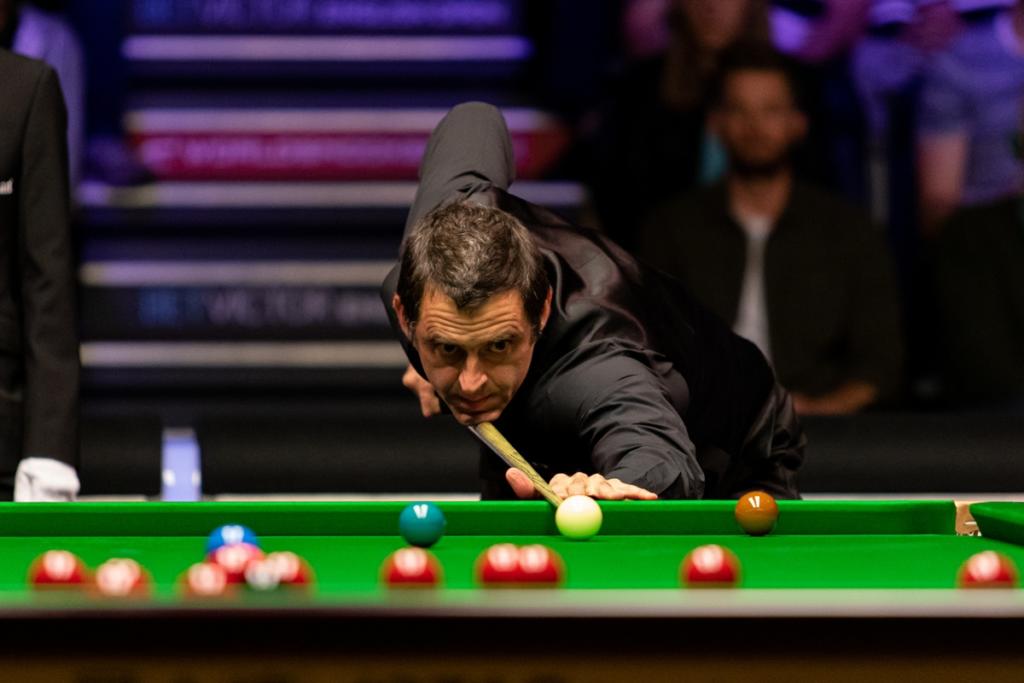
O’Sullivan’s record-breaking 153 matters because it reminds everyone that break-building still evolves. The traditional benchmark remains the 147, but his World Open clearance showed how rare situations, smart scoring choices and fearless execution can stretch what fans expect from a frame. He made the break after a free ball against Ryan Day, then went on to win the quarter-final 5-0. World Snooker Tour described it as the sport’s highest ever break, while Reuters confirmed it passed Burnett’s long-standing 148.
More than that, the break fits O’Sullivan’s wider place in the sport. He has long been treated as the game’s most natural scorer, and this moment added another line to that legacy. It also gave fresh life to the keyword maximum break itself, because fans are now asking a deeper question. If 147 is the classic standard, what does the word maximum really mean in a frame shaped by a free ball?
The answer is simple. In common snooker language, maximum break still points to the perfect red-black clearance and colour finish. Yet O’Sullivan’s 153 shows that the edge cases matter too, and that snooker’s scoring drama still has room to surprise us.
What practice for a maximum break really looks like
Many fans imagine players spend hours trying only full-table 147s. In reality, maximum-break practice is often broken into smaller pieces.
Players work on red-black routines from a few key zones. They rehearse split shots into the pack. They practise recovering shape after awkward contacts. They run colour-clearance drills to sharpen timing. They also repeat simple, straightforward cueing because once the pressure mounts, the basics matter most.
The hidden skill is error prevention
The smartest practice does not just build brilliance. It removes careless mistakes.
That means learning when not to attack the pack. It means refusing low-percentage cannons early in the break. It means accepting a pink when the black is risky. Purists may dream of 15 blacks, but real match players know the first job is to keep the visit alive.
Ironically, that mature thinking often gives a player a better chance of a true maximum break. Restraint creates rhythm. Rhythm creates control. Control creates scoring chances.
Why do fans love the maximum break so much?
A maximum break combines sport and theatre in one visit. It has structure, rising tension and a clean finish. You can feel the danger in every shot, even when the player seems in total command.
It also gives casual fans an easy way into snooker. You do not need deep tactical knowledge to sense that something special is building. The number carries meaning on its own. Then, as the break grows, you begin to see the details that experts admire: the pace on the cue ball, the choices around the pack, the discipline not to overhit a simple positional shot.
That blend of simplicity and depth is why the maximum break remains one of the sport’s most marketable moments. It is easy to celebrate, yet hard to fully explain unless you understand what sits underneath it.
Final word
A maximum break is never just a number. It is a complete examination of snooker skill. A player must pot cleanly, move the cue ball with care, manage the table, think ahead and keep calm as the moment grows.
That is why 147 still feels magical. It is not only rare because players lack talent. It is rare because the break asks for total control from the first shot to the last. And now, with Ronnie O’Sullivan’s record-breaking 153 fresh in the headlines, the idea of a maximum break feels even richer. The classic standard still stands tall, but the sport has shown once again that perfection in snooker can take many forms.