
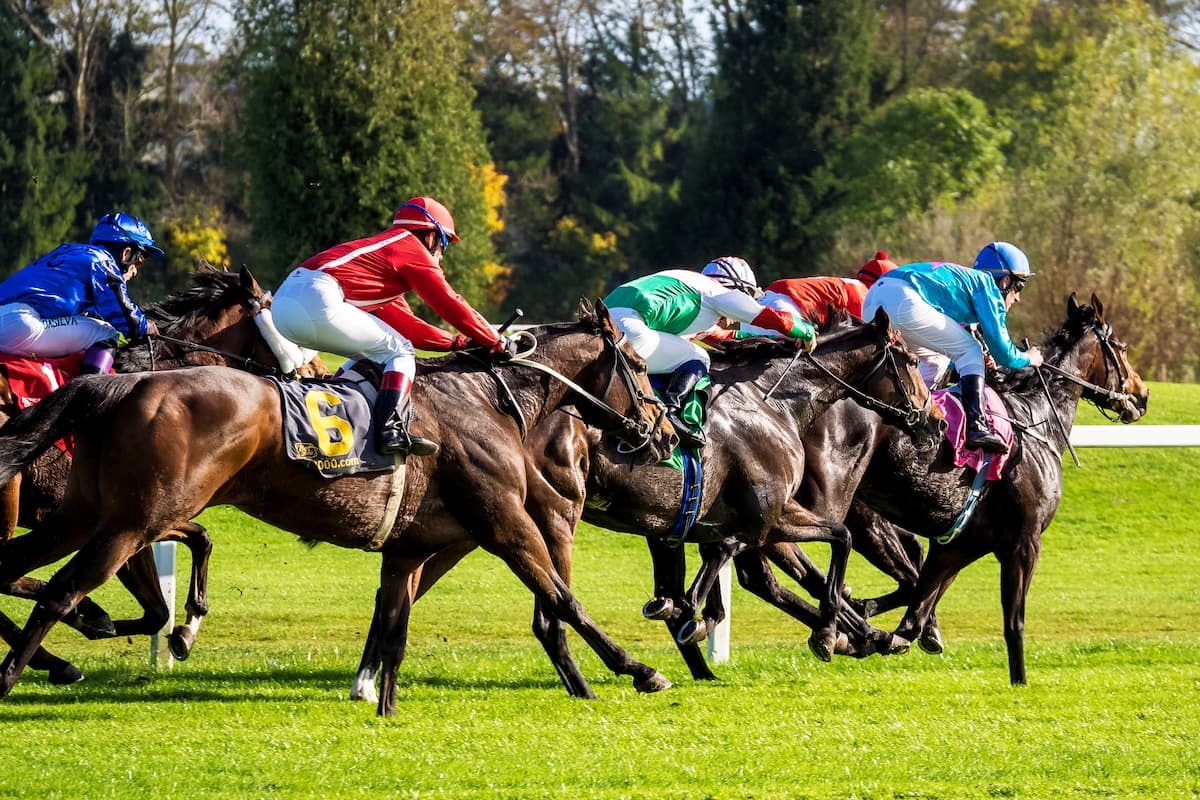
Regarding horse racing, the Cheltenham Festival is one of the biggest events in the United Kingdom. The race prize money is only second to the Grand National, making this competition fierce for every trainer who enters.
This article discusses betting markets for editorial analysis. World In Sport encourages responsible gambling. Betting content is intended for readers aged 18+ only.
18+ BeGambleAware. Please gamble responsibly.
Typically, the event starts on Saint Patrick’s Day and runs for four days in March. It features Grade 1 races, including the Cheltenham Gold Cup, the Champion Hurdle, the Queen Mother Champion Chase and the Stayer’s Hurdle.
The Beginnings Of The Cheltenham Festival
The Cheltenham Festival started in 1860 when the National Hunt Chase was held at Market Harborough. At this time, it was called the Grand National Hunt Meeting. It would take place at several different locations in its initial years; in the 20th century, it was mostly held at Warwick Racecourse. The first usage of the word ‘festival’ was found in the Warwick Advertiser in 1907.
The first time the festival was held at Cheltenham was in 1904, on a new course established at Prestbury Park in 1902. The event was again held in Warwick from 1906 to 1910, but when the Cheltenham course underwent improvements, including the addition of a new stand and plenty of drainage to make the racing ground suitable, the National Hunt Committee decided to return to Prestbury Park. This is where the race has stayed until the present day.
The Evolution Of The Cheltenham Festival Races
The races that take place during the festival have also undergone many changes and evolutions in its history. The oldest race still competed today is the Stayer’s Hurdle, which first ran in 1912. Currently, this is a championship race.
The Gold Cup was launched in 1924 as a supporting race for the County Hurdle. At this time, it was the first day’s main event, but it was quickly changed to become a championship race. Many trainers used this event to prepare their horses for the Grand National.
The Championship hurdle, which started in 1927, and the Queen Mother Champion Chase, which started in 1959, have always been championship races.
Like so many other horse racing events across the UK, the Cheltenham Festival has become a popular event to bet on. This was the case in betting shops across the UK and now continues online.
As seen by the hundreds of betting companies that cover the event, alongside the Grand National and Royal Ascot, it is one of the largest events in the betting calendar. Some bookmakers, like Irish Bet, even offer Cheltenham-specific betting offers and promotions.
The Cheltenham Festival Events Calendar
The line-up of the races during the Cheltenham Festival has changed over the years. In fact, until 2005, it was always held over three days. In 2005, this was changed with the introduction of a fourth day. This allows there to be one championship race each day, which allows for the Fridays to end with the Gold Cup.
Because of the addition of the extra date, five new races were introduced to make sure each day would have six races. Four races were added in the years following this change, so 28 races took place during the festival.
Historic Events During The Cheltenham Festival
As the event has been running for such a long time, you would expect many notable events to have happened during it. Of course, the Cheltenham Festival has seen many different historic events that have made their mark on horse racing as a sport.
For example, in 1983, Caroline Beasley was the very first female jockey to ride a winner here. She rode Eliogarty to victory in the Foxhunter chase. Similarly 1987, Gee Armytage won the Kim Muir Challenge Cup and the Mildmay of Flete Challenge Cup, making her the first female jockey to win against professionals.
In 2001, the festival had to be cancelled due to foot and mouth disease in Britain. It had initially been postponed to April, but a case of the disease was found locally in the park, which put the race course within the exclusion zone.
In 2008, the second day of the festival was cancelled due to heavy storms in the area. Luckily, the races could go ahead on the third and final days.
2019, the festival saw a record opening day, with 67,934 people attending.
Cheltenham Festival And The COVID Pandemic
Like so many other sporting events at the time, COVID-19 seriously impacted the Cheltenham Festival. In 2020, the first of all was able to go ahead from March 10th to 13th, as this fell just before guidance for lockdowns. This did affect how many visitors came to the events, with around 2,000 fewer visitors attending than the numbers from 2019.
This is a very quick look at the history of the Cheltenham Festival. Horse racing fans again will flock to the festival this year to see their favourites compete.