
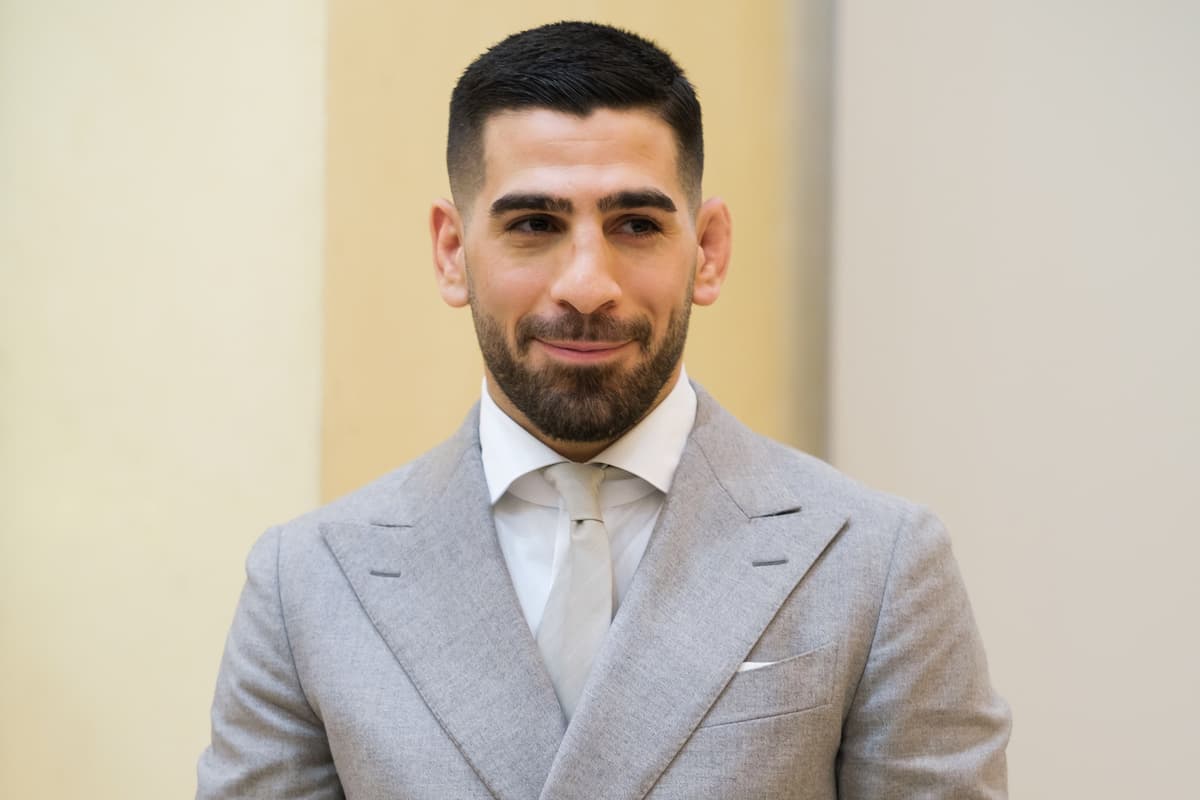
Recently Dana White shot down the idea of UFC Bantamweight champion Sean O’Malley going up in weight to fight Ilia Topuria. White stated, “I don’t know about moving divisions,” You know how I feel about that. Even Topuria was talking about not fighting anybody in the division after just winning the title. That’s crazy talk.”
However, in fairness to the Suga show, he isn’t the first champion to try and jump divisions. After defending his belt twice against Alexander Volkanovski, Islam Makhachev hinted at going up in weight to fight Leon Edwards.
Whilst Volk is elite opposition, he isn’t a lightweight. As good as Makhachev is he is yet to fight a lightweight contender as champion. Likewise, before Leon Edwards faced Colby Covington at UFC 296, he spoke about going up to middleweight.
It seems like the days of GSP, Jones and Silva are gone when a champion would try to clean out his division. The last champions who attempted to do this were Kamaru Usman and Israel Adesanya. Even then after defending his title twice. Adesanya went up in weight to challenge Jan Blachowicz for the Light heavyweight belt.
Conor McGregor started the trend of champions going up in weight and many have followed suit since.
I am going to look at the obstacles of champions going up in weight and why the UFC should clamp down on these matchups.
Holding Up Divisions
The main problem with champions going up is that division naturally gets held up. When a champion goes up quite often you will interim champions emerge. Traditionally an interim belt is created when the champion for whatever reason is unable to fight. For example, when Jon Jones was suspended the UFC created an interim belt that Daniel Cormier and Alexander Gustafson fought for. Another time was when Jose Aldo injured his rib and the UFC created an interim featherweight belt which Conor McGregor battled Chad Mendes for.
These were times when an injury or a suspension would be the only reason an interim was created. However, nowadays an interim belt is created almost as soon as a champion wins the belt. A lot of this is down to champions going up and leaving their division in the balance. When Volkanovski went up in weight an interim belt was created with Yair Rodriguez and Josh Emmet competing for the strap. Considering that Volk had defended his title 8 months ago the interim belt was unnecessary.
Nowadays interim belts are used as an excuse to keep the division busy while the champion is busy in another weight class.
This is the result of fighters holding up the division. If the UFC were to force champions to defend a minimum of 5 times before they defend then divisions would move a lot quicker. Divisions getting held up means genuinely talented fighters are seeing their careers being put on hold.
Legacies Get Ruined
In combat sports, as fans you want to see the best fight the best. This could be in their weight class or others. However, the problem with fighters vacating their weight class for another is the risk of a fighter being beaten brutally. If we look at the likes of GSP, Jon Jones and Anderson Silva. In their primes, none of these fighters went up in weight but all three are still looked at as some of the greats. Even though Jones has now gone up in weight many would argue that it could have come sooner.
However, if Jones had gone up to heavyweight when he was in his prime there is a chance that Bones would not have the reputation he has now. Had GSP gone up when Silva was a champion and lost, we may have a different vision of the welterweight GOAT.
Recently we saw Alexander Volkanovski go up in weight and get stopped by Islam Makhachev. Yes, you could argue that Volk gets credit for going up and stepping on short notice. However, Volk did get knocked out a fight later by Illia Topuria.
This begs the question how much did the Makhachev fight take out of him?
If Volk had stayed at featherweight, could we have seen a run like Jones and GSP?
Ultimately, we will never know as the last image we saw of Volkanovski is him getting flatlined in the cage. This would have been avoided if Volk was forced to stay in his weight class.
We can’t discourage fighters from going up in weight but if the UFC were to stop this, we may see reigns like the GSP and the Jones’s.
Fighters Ego’s
When Conor McGregor won the lightweight title, he was already a huge figure so winning the belt only boosted his image. However, nowadays fighters use the double champion status to fight back against the UFC.
Also Read: KSI Net Worth: A Look at His Earnings and Financial Success
Take Henry Cejudo for example he became double champion, defended the belt once and then retired. Cejudo then waited for the UFC to make a big offer for him to come back with the bantamweight targeting a bout with Alexander Volkanovski. However, this offer never came.
Why
It is because Henry Cejudo overestimated his worth. Conor McGregor was already a huge name, and the double chance status just confirmed it. A lot of fighters win two belts and believe they are automatically superstars.
This isn’t how it works, as fighters you need to earn this status. McGregor was an enigma so fans could forgive him for pursuing other ventures.
The likes of Daniel Cormier and Amanda Nunes had already cleaned out their divisions. A double champion should be someone who was a dominant champion in their division and then goes up to challenge in the higher-weight class.
UFC Double champion status allows fighters to think they are bigger than what they are. This in turn leads to fighters stalling divisions and sitting out for an extended period.
The likes of O’Malley, Edwards and Makhachev are great fighters, but they should clear out their divisions before thinking about going up. Not only would this benefit the fighters, but fans would see the next Jones and GSP.
Double champion status for fighters is great but for it to have an effect these fighters need to try to prove that they are the best in their weight class.
Image Credit: Deposit Photos