
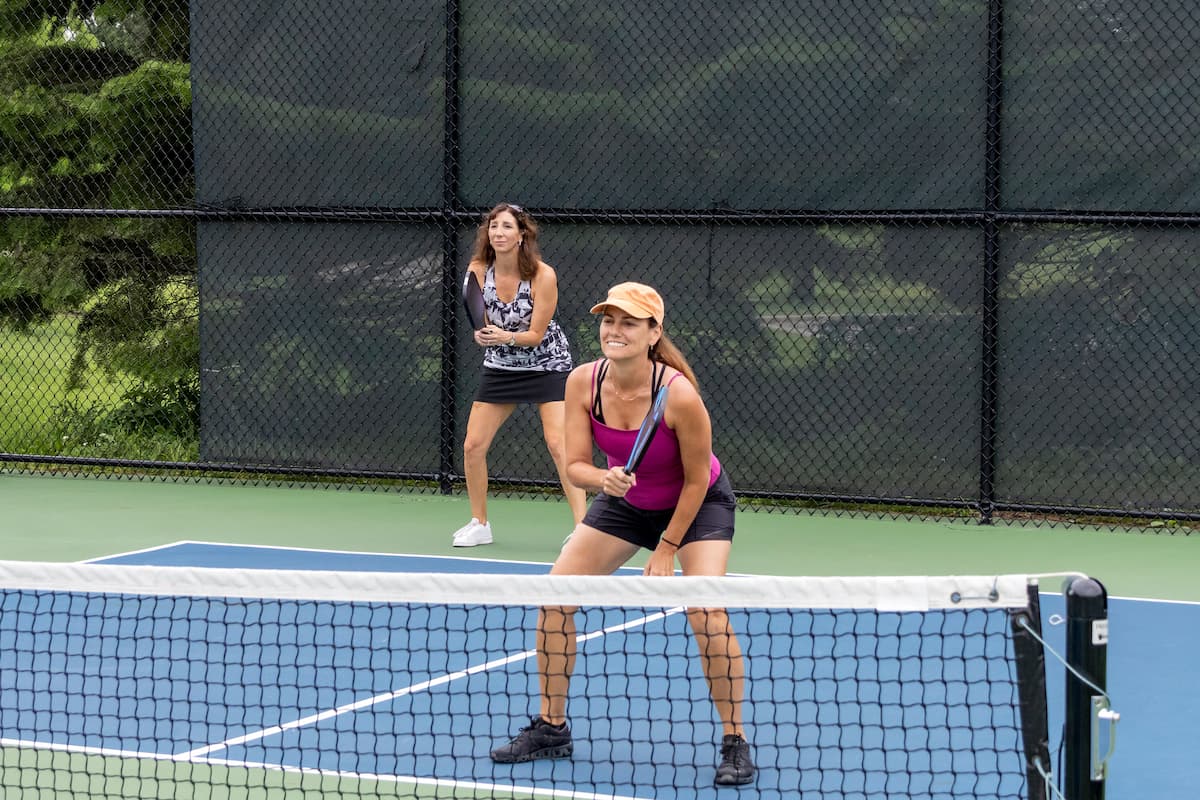
All of you must have noticed how lately you’ve been hearing the term “Pickleball” more often, and rightfully so. The game of Pickleball has been rapidly gaining popularity worldwide. According to Pickleland, the United States alone has 3.3 million players. If you want to get into the game or are just curious, here is all you need to know.
What is Pickleball?
This sport combines elements of net and racket games like tennis, badminton, and table tennis. It involves using a plastic paddle like a tennis racket to hit a relatively lightweight plastic ball with holes. The etymological origins of the name are contested; some believe that the game derives its name from the word “pickle boat”, a term used to describe a boat rowed by different oarsmen (Foote, K; 2024). Others claim the sport is named after a family dog christened “Pickles”. Either way, one can’t help but wonder how you discovered such a sport? Legend has it that three fathers living in Bainbridge Island in 1965 created the idea by mixing different types of racquet sports as a better outlet to enjoy the outdoors (Pickel Land, 2024).
How to play Pickleball?
One of the major attractions of this game is its adaptability. Pickleball is played in courts similar to a badminton court with a net tied 36 inches high; therefore, it’s not as high as a tennis net, making it easier to serve. A player uses their racket (paddle) to serve a plastic-holed ball; each serve must be underhand and made diagonally across the court, aimed to land within the opposite service box. The serve must bounce once before being returned. The serving player or team stays to the court’s right side (even side), and the players switch sides after each rally. Two important things to remember: at least one foot of the player must be behind the baseline while serving, and keep a check on the non-volley zone.
The Non-Volley Zone, or the Kitchen, is a 7-foot area close to the net on either side within which the player cannot hit or volley the ball unless it has bounced first. This is to ensure players do not dominate the game using quick volleys. Only the serving player can score a point; games are played to 11 points; however, you need two clear points to win.
Pros and Cons of Pickleball:
A sport like Pickleball wouldn’t gain popularity if not for its ease and convenience. It has many pros, and here I’ve tried to summarise them.
- Easy to pick up: The most attractive quality of Pickleball is its adaptability. Most people work jobs that require round-the-clock attention, leaving little to no time for self-care and health. The pursuit of a healthier lifestyle leads people to pickleball, which, unlike other sports, can be played by any able-bodied individual; if you have a little athleticism in you, then you can quickly rise from the beginner level.
- Age Range: This sport can be played by anyone above the age of 5, ranging to 80+. Therefore, anyone can pick up the sport and continue playing it professionally without worrying about age constraints or retirement.
- Cost Effective: Multiple player testimonies clarify that pickleball equipment, such as the paddles and ball, is relatively cheap. One can also easily repurpose athletic wear like sneakers to play the game, making it a comparatively sustainable hobby compared to sports like golf.
- Efficient: A game of pickleball does not last as long as other racket games like tennis. Due to the short intervals between rallies and the quick scoring system, a pickleball game can be concluded within 30 minutes. Putting this in terms of turf time, multiple players enjoy the low waiting time for an empty turf. All you need to do is hang your paddle on the waiting board, and within as little as 10 minutes, you can either get a turf to yourself or join a game. Pickleball courts/games have also proven to be an excellent catalyst for socializing and companionship.
Cons: While Pickleball seems like the perfect sport or hobby, it is not without faults. Some of them are:
- Risk of Injury: Contrary to popular belief, experts believe that, like many sports, pickleball players are prone to injuries. The swift movement and pace of the game can lead to knee pain, ankle and elbow injuries, and muscle discomfort. Therefore, players should exercise caution, not overwork, and use effective stretching and warm-up techniques.
- Mastery of the Game: While pickleball is an easy sport to pick up, skill progression requires relentless training. Improving the game or competing in regional matches requires mastery of footwork, shot placement, and quick thinking to improvise strategy. Many players who’ve grasped the core gameplay rather easily tend to get discouraged when they do not progress with the same ease.
- Noise Complaints: As we’ve discussed, pickleball’s popularity is directly proportional to convenience. Most pickleball courts are placed in areas of high footfall, like residential societies; however, this can also be a drawback. The game has a very distinctive sound due to the use of plastic balls and a paddle. Many residents living/working near pickleball courts complain about the noise and chatter creating friction within communities.
In conclusion, while it has its drawbacks, Pickleball is a sport that you should consider. Anyone in search of a healthy lifestyle or hobby would be delighted by pickleball and its convenience. Alternatively, for adults, it's a wonderful opportunity to socialise and be a part of a group outside of work.
Don’t Miss: Tongits Go vs. Traditional Filipino Card Games: Which One Dominates in 2025?