
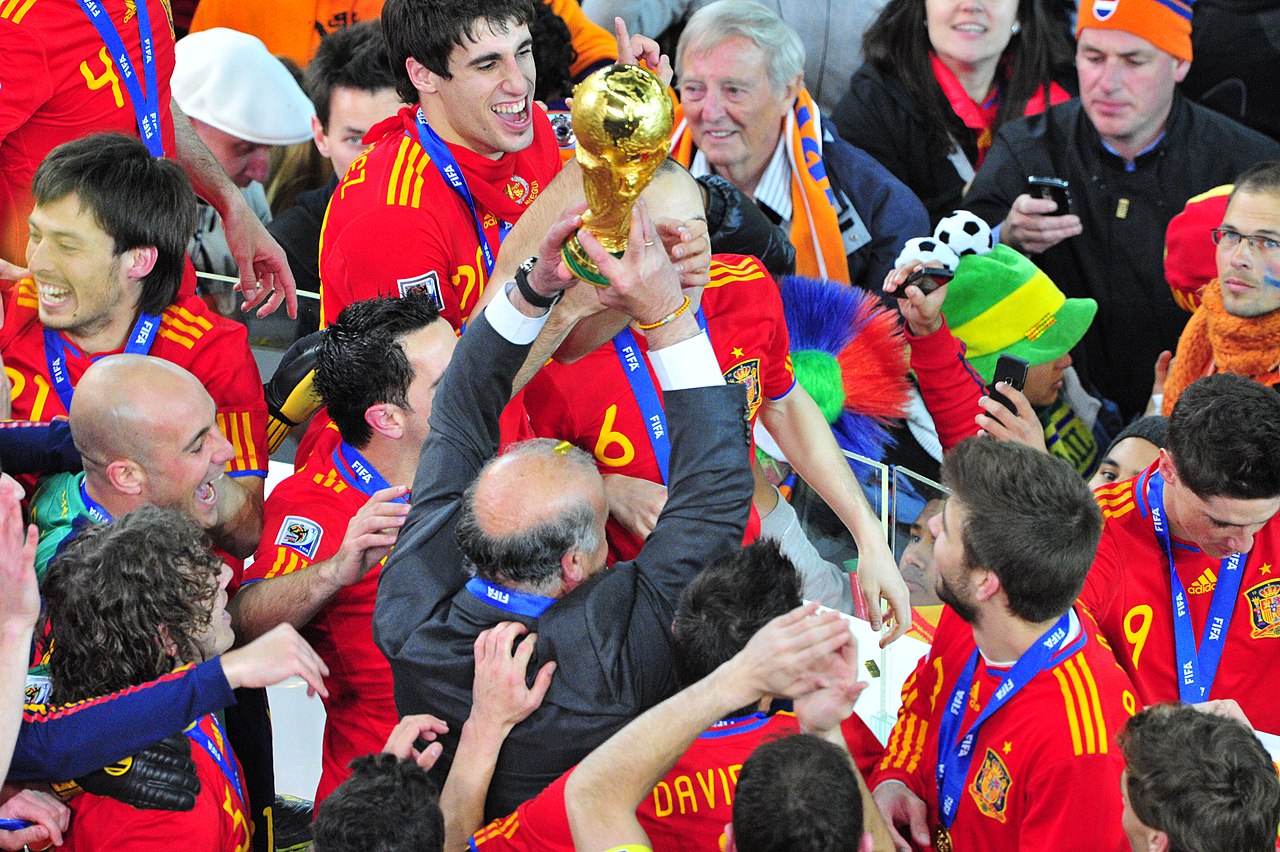

The Spain 2010 World Cup squad stands as one of the most admired teams in football history. Their style, teamwork, and rhythm changed the global game.
Because this team mixed patience with flair, it captured the attention of fans everywhere. Although many great sides have come and gone, the Spain 2010 World Cup squad set a new standard. Their journey in South Africa still feels fresh, and their impact remains strong.
This in-depth analysis explores the players, tactics, key matches, and long-term legacy of the Spain 2010 World Cup squad.
The Road to South Africa
Spain arrived at the 2010 World Cup with confidence. They had won Euro 2008, and that success gave them belief. Because of that victory, fans expected Spain to take the next step. However, pressure also followed them. Many wondered if they could match the same level of control on the world stage.
Yet the Spain 2010 World Cup squad used this pressure as fuel. Their training stayed intense, and their rhythm stayed sharp. They had the balance of youth and experience. They also had one of the deepest squads in the tournament.
Core Playing Style That Sets Them Apart
The Spain 2010 World Cup squad played with a unique identity. They trusted short passes. They kept the ball moving. And they refused to rush. This style, often called tiki-taka, became their trademark. Since they used tight triangles and smart movement, they often frustrated opponents.
Although many teams tried to press them, Spain stayed calm. They played with patience. They waited for the right moment. And they always believed that control led to chances. Because of this structure, their style spread across the world and influenced many coaches.
Goalkeepers Who Set the Standard
Iker Casillas played a huge role for the Spain 2010 World Cup squad. As captain, he gave confidence to the rest of the team. His quick reactions and strong leadership shaped Spain’s defence. Even though he faced pressure in key moments, he always stayed calm.
Pepe Reina and Víctor Valdés served as strong backups. They brought experience and high standards. Because they supported the squad with unity, the goalkeeping group felt complete.
Defence Built on Trust and Precision
Spain’s defence worked as a collective. They rarely panicked. They always trusted the system. And they moved as one.
Carles Puyol stood out with his energy and bravery. He won duels. He read danger well. And he pushed the team when needed. Gerard Piqué complemented him with calmness and a smooth style. Their balance made Spain very hard to break down.
Joan Capdevila and Sergio Ramos played as full-backs. They added width while also staying disciplined. Although they moved forward often, they always returned to protect the shape.
👉 Related: What Made the 2006 Italy World Cup Squad So Special?
Midfield That Defined an Era
The Spain 2010 World Cup squad relied heavily on their midfield. This group set the rhythm for every match. And they did it with elegance.
Xavi served as the heartbeat. Every pass mattered. Every movement counted. Because he never rushed, he controlled the pace. Andrés Iniesta offered something different. He carried the ball with grace and found gaps others could not see. He also scored the winning goal in the final, which became one of the most famous goals in football history.
Sergio Busquets offered stability. He reads well. He won the ball back without drama. And he kept Spain balanced. Xabi Alonso added long-range passing and composure. Together, they built a midfield that many still consider the greatest of all time.
Forwards Who Added Flair and Finishing
Up front, Spain had several options. David Villa proved to be the most important attacker. Because he made clever runs and finished with confidence, he scored vital goals. He delivered under pressure and became one of the stars of the tournament.
Fernando Torres entered the tournament after an injury, yet he still helped with movement and experience. Pedro added energy and unpredictability. Jesús Navas provided pace from the wings. All of them added something different, and they helped Spain remain unpredictable.
Key Matches That Shaped Their Triumph
Source: Deposit Photos
Spain’s journey started with a shock. They lost 1-0 to Switzerland. Because of this defeat, questions appeared quickly. People wondered whether they could recover.
However, Spain reacted well. They stayed focused. They kept the same style. And they continued to trust the system. They beat Honduras and Chile to top the group.
In the knockout rounds, Spain played with even more maturity. They beat Portugal in a tight match. They then defeated Paraguay in a dramatic quarter-final. The semi-final against Germany became another test. Spain stayed patient until Puyol scored a powerful header.
The final versus the Netherlands was tense. The match turned aggressive at times, but Spain kept calm. And when Iniesta scored in extra time, he created a moment that fans will never forget. The Spain 2010 World Cup squad lifted the trophy for the first time in their history.
👉 Related: 2002 Brazil World Cup Squad
Why This Team Left a Lasting Legacy
The Spain 2010 World Cup squad did more than win. They changed the sport. Because their style focused on control, intelligence, and patience, many clubs and national teams copied them. Their success also inspired young players across Spain to follow the same philosophy.
Furthermore, the team stayed grounded. Many players came from humble backgrounds. Their unity and respect helped them stay focused. This quality made the Spain 2010 World Cup squad feel relatable and admired.
Player Development and Coaching Influence
Spain’s golden era came from planning and belief. Spanish clubs invested in youth systems. Coaches taught children to trust the ball. They also focused on technique before strength. As these players grew, they entered the national team ready to play the same way.
Vicente del Bosque built on that foundation. He kept things simple. He supported players. And he protected the group from pressure. Because he trusted them, the squad stayed relaxed even in the biggest moments.
How the Spain 2010 World Cup Squad Still Shapes Modern Football
When people talk about football philosophy today, Spain’s influence often appears. Teams across Europe now value possession. Many focus on short passes. And youth academies around the world teach patterns that came from this era. Because the Spain 2010 World Cup squad proved that intelligent football leads to success, their legacy continues to grow.
Even now, fans rewatch Spain’s matches to understand their brilliance. Coaches study their movement and spacing. And young midfielders still see Xavi, Iniesta, and Busquets as role models.
Final Thoughts
The Spain 2010 World Cup squad earned their place in football history. Their unity, style, and control made them unforgettable. Although many teams dream of such success, few reach this level of excellence. Because they continued to inspire the world, their story remains powerful today.
👉 Related: The Untold Glory of the France 1998 World Cup Squad