
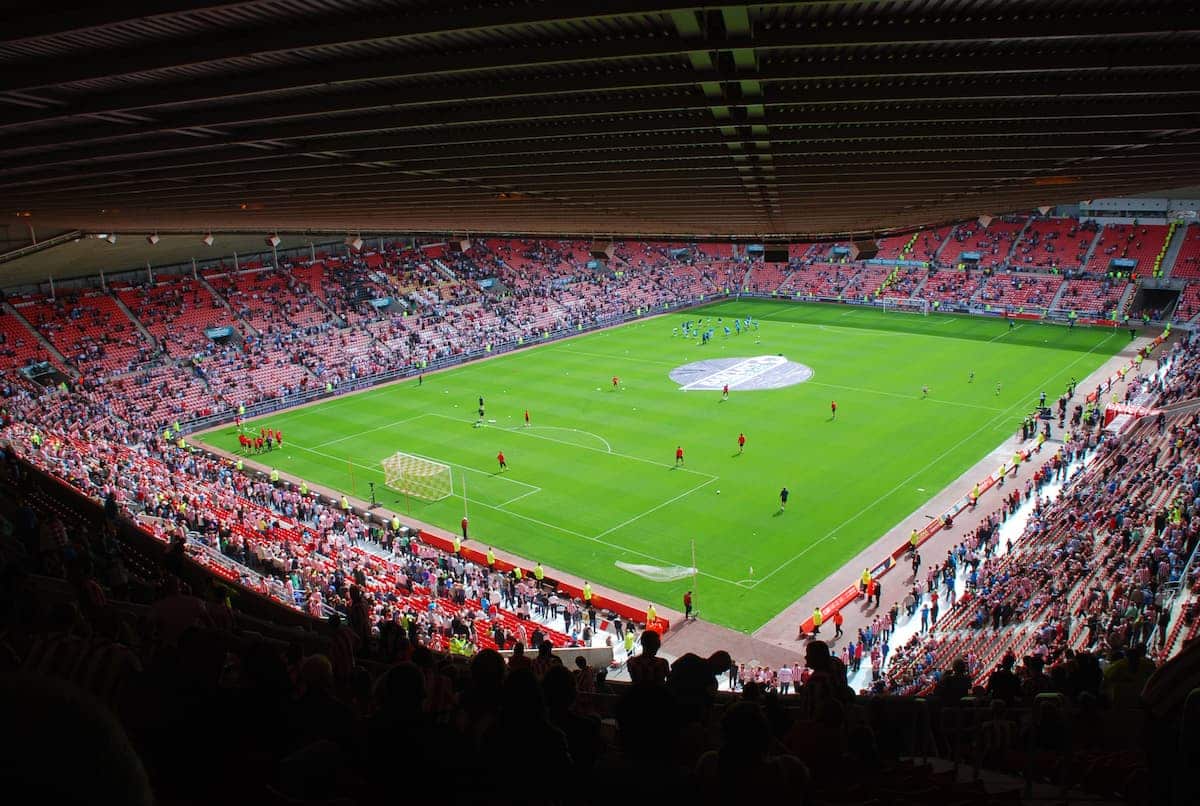
This weekend, for the first time in seven years, Sunderland will take on Newcastle in another instalment of the Tyne-Wear derby. The Newcastle Sunderland Rivalry dates back further than you think. Before the two titans of North East lock horns, we take a look at the history behind this fixture and what makes it one of the biggest games in English football.
Civil War
As with a lot of derbies, the rivalry between Sunderland and Newcastle stretches back to before association football existed. During the First English Civil War (1642-1646), both cities found themselves on opposing sides of the conflict.
Newcastle, having been historically favoured by the crown, particularly in regards to supporting the city’s coal industry, was a Royalist stronghold, while Sunderland was Parliamentarian, partly due to the large Scottish community in the city and partly due to some disdain felt towards Newcastle for the increasing monopoly it held on the area’s coal.
The Beginning of the Newcastle-Sunderland Rivalry
The indecisive Battle of Boldon Hill in 1644 saw armies from both cities in combat against each other, with further, more indirect meetings taking place at the Siege of York and the Battle of Marston Moor.
Embed from Getty ImagesSunderland’s Scottish contingent came into force again during the Jacobite Risings, with Newcastle remaining on the side of the English during the rebellions. These historic clashes became woven into the fabric of the land. Both cities grew as ports and hubs of industry in the years after, which only exacerbated the tension between the two.
Sunderland developed into a major shipyard, one of the largest in the world at its peak. It’s said that the nickname Mackem came from derides from their Geordie counterparts on up the River Tyne (‘You mak ‘em, we tak ‘em’) as ships were often taken up to Newcastle to have engines fitted after being constructed in Sunderland.
Embed from Getty ImagesBeing only twelve miles apart from each other, gentle feuding was constant even if it hadn’t (thankfully) spilled into anything bigger. Newcastle Sunderland rivalry came with a tense history, however, always served as a backdrop to any jibes or aggro. When football began to take off in Victorian Britain, it seemed inevitable the clubs would turn into bitter rivals.
Embed from Getty ImagesFootball Derby Origins
Despite the historical conflicts between the cities, a football rivalry wasn’t immediate. Sunderland AFC was founded in 1879 and quickly became a force in the Football League, winning four league titles between 1891 and 1902.
Newcastle United were formed as such in 1892 though that came after two clubs – Newcastle West End and Newcastle East End – combined, or united, into one. It took longer for Newcastle to gain league-winning momentum, but eventually won three titles in the early 1900s.
Embed from Getty ImagesThe first Football League match resulted in a 3-2 win for Newcastle at Roker Park. Though, under Newcastle’s former guises, before United’s official forming, Sunderland had run away 2-0 victors in the first-ever matchup in 1888.
Embed from Getty ImagesTheir respective success didn’t cause much animosity. A meeting in 1901 resulted in crowd trouble and violence when 120,000 people attempted to attend the 30,000-seat stadium, but that wasn’t due to fractions between the supporters.
The relationship between the two clubs had more of a neighbourhood rivalry feel to it. Sunderland even organised friendly matches to aid Newcastle when the Magpies underwent financial difficulties.
Animosity Grows
It was in the 1960s when the fixture began to take the derby form we recognise today. It seems that it fell victim to the general increase in football violence and hooliganism. Attending English football in the ’60s, ’70s and ’80s was treacherous at best and flat-out dangerous at worst. The once more good-natured affair slowly turned into a hatred-filled collision marred with violence and a hefty police presence. During this time, both clubs suffered from a lack of silverware, bar a famous FA Cup win in 1972 for the Black Cats.
Embed from Getty ImagesThe 1980s in particular saw a harmful rise in the disruptive and destructive culture at football matches. Two notorious hooligan firms were created during this decade – the Seaburn Casuals, a Sunderland supporting group, and Newcastle Gremlins, who were aligned with the Toon.
Both firms perpetrated horrendous violence into the early 2000s, with a planned altercation between the two firms leading to over thirty arrests. In 1990, a Second Division (now Championship) playoff semi-final led to Newcastle fans storming the pitch in the hope of calling off the game when Sunderland went 2-0 ahead in the second leg. Play resumed and Sunderland eventually went on to win promotion.
Embed from Getty ImagesThough Newcastle United had been in the Premier League since 1993/94 and, under the stewardship of Kevin Keegan, had been routinely contesting for the championship ever since, Sunderland first arrived in 1996/97, only to be relegated at the end of their debut season, complete with a 2-1 loss to Newcastle at home through Les Ferdinand and Peter Beardsley, who scored a hat-trick in the fixture for the Geordies in 1985.
Newcastle Sunderland Rivalry
The Mackem’s long-standing ground Roker Park also came to a close at the end of that season. Now in the Stadium of Light, Sunderland returned to the top flight in 1999/00, exacting revenge for three years prior and beating Newcastle 2-1 at St James Park in what would be Ruud Gullit’s last game as Magpies boss.
Embed from Getty ImagesThe derby was a much more regular encounter in the 2000s Premier League era and Newcastle usually came out on top, recording one defeat in sixteen games. Though both sides’ domestic success dwindled further into the millennium, only able to pick up EFL Championship titles in seasons following Premier League relegation. Newcastle did manage to maintain some form in European competitions, culminating in a UEFA Intertoto Cup win in 2006/07.
The Modern Era
Sunderland’s tumbling down the pyramid into League One for a few seasons has meant the last Tyne-Wear Derby was played on March 20th 2016 with a 1-1 draw at St James’ Park. It was the end of a golden spell for Sunderland in the fixture, having won six consecutive games against Newcastle before that, conceding a single goal in that time. Newcastle were relegated that same year, their fate sealed by Sunderland trouncing Everton 3-0.
Embed from Getty ImagesThough Sunderland was dismally relegated the following season and Newcastle promoted back on the first attempt, the derby has been wandering no man’s land ever since. That was until last month when the FA Cup third-round draw was made and set up yet another occasion to add to this famous rivalry.
A lot has changed since that 1-1. Both teams have new owners. Both teams have had success in recent years, with Sunderland reaching the Championship playoffs a year after their long-awaited promotion from League One and Newcastle returning to the UEFA Champions League for the first time in twenty years following a 4th placed finish last season (alongside a Carabao Cup silver medal).
Embed from Getty ImagesTony Mowbray’s December dismissal means Eddie Howe will be facing Michael Beale in the opposite dugout. A former Rangers manager, Beale is no stranger to huge derby matches. He goes into Saturday’s game with a mixed record of two wins, a draw and a loss in his first four games, though Howe’s men can’t boast much better form, with one win in their last five.
Embed from Getty ImagesExtraordinarily, both clubs go into this fixture with an exactly even record in this derby – 53 wins each and 50 draws a piece.
Don’t Miss
The Newcastle-Sunderland Rivalry will ignite once again come Saturday, at the Stadium of Light, and that record will have to be disrupted. If there is any game to get the fans fully on your side or galvanise your side out of a wretched reign of form, then it’s this one.
Image Credit: Ben Harding., CC BY-SA 2.0, via Wikimedia Commons
Agree Kev. Home crowd will be a huge factor for them
A huge derby/rivalry can see Sunderland pulling this one off