
Early Life and Rise to Prominence
Boxer Jack Johnson, born John Arthur Johnson on March 31, 1878, in Galveston, Texas, emerged from humble beginnings to become one of the most significant figures in boxing history.
The son of former slaves, Johnson grew up in poverty, working various odd jobs from a young age. His boxing journey began in the local gyms of Galveston, where he quickly demonstrated an exceptional talent for the sport. His early career in the late 1890s saw him developing a unique defensive style and powerful counterpunching, setting him apart from his contemporaries.
Despite the pervasive racial discrimination of the time, Johnson’s skill and determination enabled him to rise through the ranks of the boxing world. During this period, African American boxers were often denied opportunities to compete for major titles. Johnson, however, remained undeterred, fighting numerous matches and gaining a reputation as a formidable opponent.
His persistence paid off on December 26, 1908, when he faced Canadian boxer Tommy Burns in Sydney, Australia. In a highly anticipated match, Johnson defeated Burns to become the first black heavyweight champion of the world. This historic victory not only showcased his prowess but also challenged the racial prejudices of the era.
Jack Johnson: Reign as Heavyweight Champion
Boxer Jack Johnson’s extraordinary talent and success as heavyweight champion provoked significant social turmoil. Johnson defended his title multiple times in the ring, demonstrating his dominance in the sport. One of the most notable defences occurred on July 4, 1910, against James J. Jeffries, a former champion coaxed out of retirement to reclaim the title for white America. Billed as the “Fight of the Century,” this match carried significant racial undertones, with Jeffries seen as the “Great White Hope” meant to restore white supremacy in the boxing world.
Johnson’s victory over Jeffries was a personal triumph and a symbolic moment in the struggle for racial equality. The fight ended in the 15th round when Jeffries’ corner threw in the towel, unable to withstand Johnson’s superior skill and strategy. The aftermath of the fight saw widespread race riots across the United States, highlighting the deep-seated racial tensions of the time. Johnson’s success in the ring was a direct challenge to the prevailing racial order, and his dominance became a source of pride and controversy within the African American community and beyond.
Controversies and Legal Troubles
Outside the ring, Jack Johnson led a contentious life that mirrored the celebration of his boxing career. He drove expensive cars, wore fine clothes, and associated with high society. Most controversially, Johnson openly dated and married white women, defying the rigid racial norms of early 20th-century America. His relationships with white women, in particular, made him a target of widespread public outrage and legal persecution.
In 1913, authorities convicted Johnson under the Mann Act due to his high-profile lifestyle and defiance of societal norms. Initially intended to combat human trafficking, the Mann Act was often used for racially motivated prosecutions. They accused Johnson of transporting a woman across state lines for “immoral purposes,” a charge many believed was a thinly veiled attack on his race and relationships. Rather than face imprisonment, Johnson fled the United States, living in exile in Europe, South America, and Mexico for several years.
Johnson continued to box during his time abroad, but his career began to wane. He eventually returned to the United States in 1920, where he surrendered to authorities and served a year in federal prison. Despite these legal troubles and the decline of his boxing career, Johnson’s impact on the sport and society remained profound. His defiance in the face of racial oppression and his achievements in the ring cemented his legacy as a trailblazer and a symbol of resistance.
Jack Johnson: Legacy and Posthumous Recognition
Boxer Jack Johnson’s influence extended far beyond his boxing achievements. He was a pioneer who broke racial barriers and paved the way for future generations of African American athletes. His life story has been the subject of numerous books, documentaries, and cultural works, including the 1970 play “The Great White Hope,” which was later adapted into a film. Johnson’s legacy as a symbol of courage and resilience continues to inspire.
There has been a growing recognition of the injustices Johnson faced in recent years. In 2018, President Donald Trump posthumously pardoned Johnson, acknowledging the racial motivations behind his 1913 conviction. This pardon resulted from decades of advocacy by historians, sports enthusiasts, and civil rights activists who sought to right a historical wrong. The pardon was a symbolic gesture, underscoring the enduring impact of Johnson’s life and career.
Johnson’s story is a testament to the enduring struggle for racial equality and the power of individual resilience. As the first black heavyweight champion, he revolutionized the sport of boxing and challenged his time’s deeply entrenched racial prejudices. His life, marked by triumph and tribulation, reflects the complexities of the African American experience in the early 20th century.
In summary, Jack Johnson’s life and career are emblematic of the broader fight for racial justice in America. His victories in the ring were matched by his battles against societal discrimination, making him a pioneering figure in sports and civil rights history. Through his unwavering determination and indomitable spirit, Johnson left an indelible mark on the world, which continues to be celebrated and remembered today.
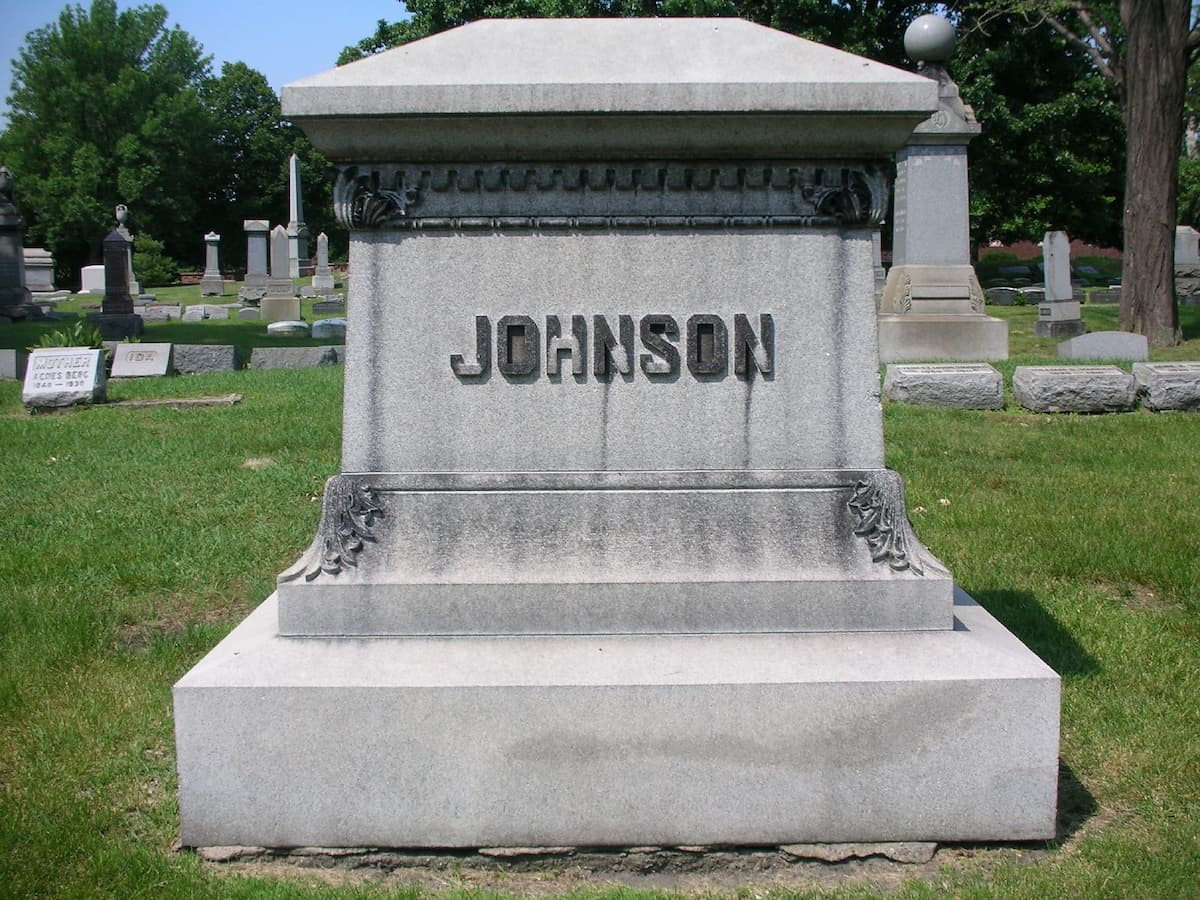
Image Credit: Jack Johnson Grave (1878-1946) | Flickr