
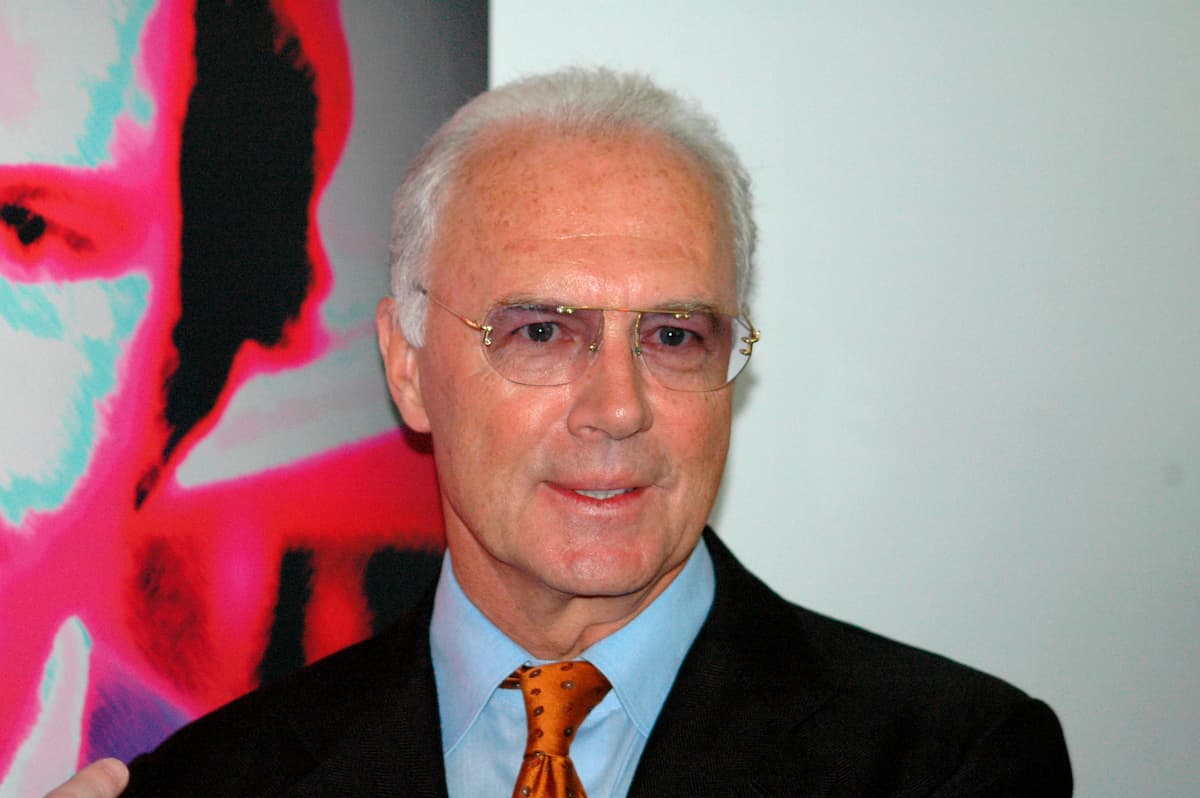
German footballing legend Franz Beckenbauer has passed away at the age of 78. The iconic Bavarian centre-back, renowned for winning the World Cup as both a player in 1974 and as a manager in 1990, peacefully departed in the presence of his family.
In a statement to the DPA news agency, his loved ones expressed their profound sorrow, saying, “It is with deep sadness that we announce that my husband and our father, Franz Beckenbauer, passed away peacefully in his sleep yesterday, Sunday, surrounded by his family. We ask that you be able to grieve in silence and refrain from asking any questions.”
Franz Beckenbauer has passed away
Beckenbauer’s extensive footballing career unfolded after he emerged from the Bayern Munich youth system in 1964, marking the beginning of a journey that would see him become an enduring figure in the world of football.
Continue reading to trace the remarkable career of Franz Beckenbauer, delving into the highlights that defined his legacy both as a player and a manager.
Introduction
Franz Beckenbauer, also known as “Der Kaiser,” is a legendary figure in the world of football. Born on September 11, 1945, in Munich, Germany, Beckenbauer’s impact on the sport transcends his playing and managerial career.
With a career that spans over five decades, Beckenbauer has left an indelible mark on the beautiful game. This profile delves into the life and achievements of the man who revolutionized football and became an icon both on and off the field.
Early Life and Rise to Stardom
Humble Beginnings
Franz Anton Beckenbauer grew up in the working-class district of Giesing in Munich. Raised in post-war Germany, football was a means of escape for young Franz. His talent quickly caught the attention of local clubs, and at the age of 14, he joined the youth team of Bayern Munich.
Bayern Munich Years
Beckenbauer made his debut for Bayern Munich’s first team in 1964, marking the beginning of a long and illustrious career with the club. Initially a midfielder, he soon transitioned to central defence, a move that would redefine his role in the sport.
His leadership skills were evident even in his early years, and by 1968, he was named captain of Bayern Munich.
Domestic Success
Under Beckenbauer’s captaincy, Bayern Munich enjoyed a period of domestic dominance. The club secured three consecutive Bundesliga titles from 1972 to 1974 and achieved unprecedented success in the European Cup, winning three consecutive titles from 1974 to 1976. Beckenbauer’s versatility and ability to read the game made him a linchpin in Bayern’s defence and a key contributor to their success.
International Glory
World Cup Triumphs
Beckenbauer’s international career was equally illustrious. He made his debut for the West German national team in 1965 and went on to achieve the pinnacle of success by winning the FIFA World Cup twice. The first triumph came as a player in 1974, when Beckenbauer led West Germany to victory on home soil. Remarkably, he repeated the feat as a manager in 1990 when West Germany triumphed in Italy.
1974 World Cup: The Captain and Leader
As the captain of the West German team in the 1974 World Cup, Beckenbauer showcased not only his footballing prowess but also his leadership qualities.
He marshalled the defence with composure, guiding his team to victory in the final against the Netherlands. This triumph solidified his status as one of the greatest players of his generation.
1982-1990: Transition to Management
After retiring from professional football in 1983, Beckenbauer seamlessly transitioned into management. His tactical acumen and understanding of the game were evident as he led West Germany to the final of the 1982 World Cup and the semi-finals in 1986. The crowning achievement came in 1990 when Beckenbauer, now the manager, guided a unified Germany to its third World Cup title in Italy.
Legacy as “The Kaiser”
Playing Style and Contributions
Beckenbauer’s playing style was characterized by elegance, intelligence, and a calming influence on the field. His ability to operate as a sweeper, advancing beyond the defensive line to start attacks, revolutionized the role of defenders in football. The term “Libero” became synonymous with Beckenbauer, as he showcased a unique blend of defensive solidity and attacking flair.
Influence on Future Generations
The Kaiser’s impact extended beyond his playing days. Many modern defenders and managers cite Beckenbauer as a source of inspiration. His ability to adapt to different roles on the field, coupled with his leadership qualities, set a benchmark for future generations of footballers.
Off the Field
Beckenbauer’s influence was not confined to the pitch. Off the field, he became a respected football administrator. He served as the president of Bayern Munich and later as the president of the German Football Association (DFB). His efforts were instrumental in Germany’s successful bid to host the 2006 FIFA World Cup, marking a significant chapter in the country’s footballing history.
Challenges and Controversies
Controversial Move to the Cosmos
In 1977, Beckenbauer made a surprising move to the New York Cosmos in the North American Soccer League (NASL).
While this decision raised eyebrows in Germany, it showcased Beckenbauer’s global appeal and his desire to promote football to new frontiers.
Managing the National Team
Beckenbauer faced criticism during his tenure as the manager of the German national team. The team’s performance in the early stages of the 1990 World Cup was less than stellar, leading to doubts about Beckenbauer’s managerial abilities.
However, he silenced the critics by guiding the team to victory, cementing his reputation as a successful manager.
Later Years
Continued Contribution to Football
Even after retiring from active managerial roles, Beckenbauer continued to be involved in football. He remained an ambassador for the sport and shared his insights as a television pundit. His commitment to the game was unwavering, and he actively participated in initiatives to promote football globally.
Personal Life
Beyond the football pitch, Beckenbauer’s personal life has been subject to public interest. Married twice, he has five children. His life off the field, while occasionally under the media spotlight, has largely remained private, allowing him to focus on his enduring passion for the beautiful game.
Honors and Achievements
Individual Accolades
Beckenbauer’s exceptional career has been recognized with numerous individual awards. He won the prestigious Ballon d’Or twice, in 1972 and 1976, a testament to his consistent excellence on the field.
Hall of Fame Inductions
In acknowledgement of his contributions to football, Beckenbauer has been inducted into various football halls of fame, including the FIFA 100 list of the greatest living players and the Ballon d’Or Dream Team.
Lifetime Achievement Awards
In addition to his playing and managerial achievements, Beckenbauer has received lifetime achievement awards from football governing bodies, acknowledging his enduring impact on the sport.
Conclusion
Franz Beckenbauer’s journey from the streets of Giesing to becoming the Kaiser of football is a testament to his exceptional talent, leadership, and enduring passion for the beautiful game. As a player, he redefined the role of defenders, leaving an indelible mark on the sport.
As a manager and football administrator, he continued to shape the landscape of football, contributing to Germany’s footballing success.
Beyond the trophies and accolades, Beckenbauer’s legacy lies in his influence on generations of footballers and his role in shaping the global perception of the sport.
The Kaiser’s impact transcends borders, making him not just a football legend but a cultural icon. As the years pass, Franz Beckenbauer’s name will continue to echo with the legends of the game.
We lost a legend