
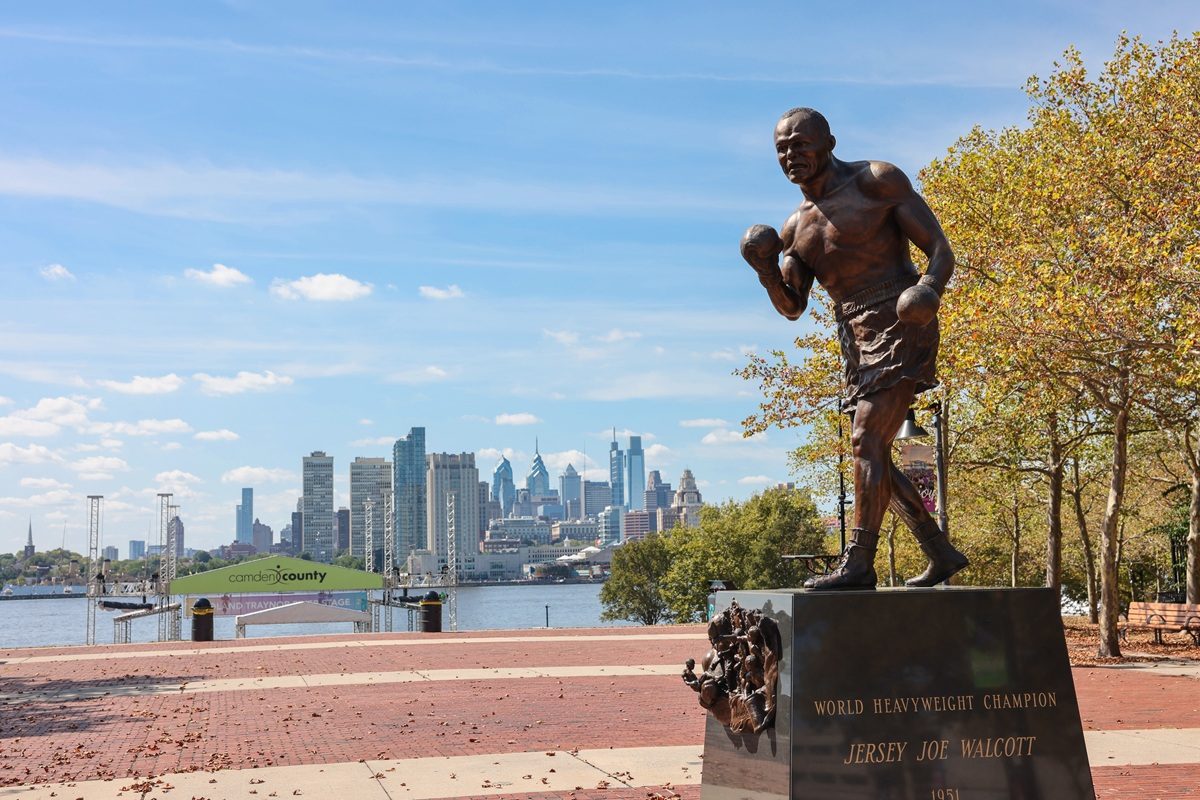
Arnold Raymond Cream, better known as Jersey Joe Walcott, is one of heavyweight boxing’s great late bloomers.
Say his birth name in a room full of casual boxing fans, and it may not cause much reaction. Yet mention “Jersey Joe Walcott” among serious fight fans, and the mood changes. Heads nod. Voices rise. The respect is instant.
Walcott was not just another old heavyweight champion from boxing’s black-and-white age. He was clever, awkward, strong, and hard to read. He fought with rhythm, tricks, footwork, and a calm sense of danger. In many ways, he was a boxer-puncher before that term became common.
For more classic fight stories, follow our boxing coverage and explore more names from the boxing history archive. Walcott’s story also fits neatly alongside our guide to the greatest heavyweights of all time.
From Arnold Cream to Jersey Joe Walcott
Jersey Joe Walcott was born Arnold Raymond Cream on January 31, 1914. He grew up in Camden, New Jersey, a city that became part of his identity for the rest of his life.
His childhood was hard. His family had little money, and life became even tougher when his father died. Walcott was only 15. Suddenly, he was no longer just a son or a brother. He became the man of the house.
He had to help support his mother and younger siblings. So, he took a job in a soup factory. It paid something, but it did not offer much hope. Like many fighters from poor backgrounds, he saw boxing as a way out.
The ring gave him danger. Yet it also gave him purpose.
He took the name “Joe Walcott” from his boxing idol, Barbados Joe Walcott. To make the name his own, he added “Jersey” at the front. From then on, Arnold Cream became Jersey Joe Walcott.
It was more than a ring name. It became a symbol of where he came from.
A heavyweight who did not fit the mould
Walcott stood around 6ft tall. By modern heavyweight standards, that sounds small. But in his own era, he was built differently from many rivals.
He looked compact, muscular, and strong. Old footage shows a fighter with a thick upper body, sharp balance, and a natural sense of timing. He did not always look taller than his opponents. Yet he often looked more powerful.
To understand that era better, readers can also use our guide to boxing weight classes and our explainer on boxing titles, records, and fight terms.
Walcott had something else, too. He had ring craft.
He could step away, feint, pause, draw a mistake, and then fire. His footwork was not just movement for movement’s sake. It created traps. He made opponents think they were safe, then punished them for believing it.
He was not a simple slugger. He was not a pure mover either. He sat somewhere between the two. That made him dangerous.
Early setbacks and a long road to the title
Walcott did not enjoy a smooth rise. His career was full of hard lessons, poor breaks, and painful defeats.
He had little formal training early on. He learned on the job, often against tough men who knew how to survive. Because of that, his record never had the polished look of an unbeaten great.
Yet records can mislead.
Walcott fought through a brutal era. He faced strong contenders, skilled champions, and dangerous punchers. He also had to build his career at a time when boxing politics, race, money, and opportunity could shape a fighter’s path as much as talent.
By the time he reached the top level, he had already taken losses. But he had also earned major wins. Victories over Joey Maxim and Jimmy Bivins helped move him closer to a world heavyweight title shot.
That chance came against Joe Louis.
The Joe Louis fights
On December 5, 1947, Walcott challenged Joe Louis for the world heavyweight title.
Louis was already a legend. He had ruled the division for years and stood as one of the most famous champions in all sports. Walcott entered as the challenger, but he did not fight like a man happy to be there.
He dropped Louis and boxed with skill, nerve, and control. When the final bell rang, many people believed Walcott had done enough.
The judges disagreed.
Louis kept the title by split decision. The verdict caused a huge debate. Even Louis, by some accounts, looked unsure in the immediate aftermath.
The controversy was strong enough to earn Walcott a rematch. Six months later, he faced Louis again. This time, Louis ended the argument in the ring. He knocked Walcott out in the 11th round.
For many fighters, that would have been the end of the dream. For Walcott, it was another delay.
The Ezzard Charles rivalry
After Louis retired, Ezzard Charles became the leading man in the heavyweight division. Charles was brilliant. He was smooth, sharp, and technically gifted. He had beaten many elite fighters and carried himself like a master boxer.
Walcott challenged him for the vacant NBA heavyweight title but lost a 15-round decision. He later met Charles again and lost another decision.
Once more, Walcott found himself close but not close enough.
By then, he was in his late 30s. In boxing terms, that was old. In heavyweight terms, it was still old. Most fighters do not improve at that age. They fade. They slow down. They become names for younger men to beat.
But Walcott was different. His style aged well because it leaned on timing, tricks, and experience. He did not need to outwork every opponent. He needed to outthink them.
Then came July 18, 1951.
The night Jersey Joe Walcott became champion
Walcott met Ezzard Charles again at Forbes Field in Pittsburgh. It was his fifth attempt to win the world heavyweight title.
This time, he made history.
In the seventh round, Walcott produced one of the cleanest, most beautiful knockout punches in heavyweight history. He drew Charles in, shifted his body, and fired a left uppercut with perfect timing.
Charles fell forward to the canvas. He tried to rise, but his body would not obey him. The fight was over.
At 37, Jersey Joe Walcott was finally the heavyweight champion of the world.
It was not just a title win. It was a triumph of patience, survival, and craft. Walcott had worked, waited, lost, rebuilt, and returned. He had taken the long road and still reached the summit.
His Britannica biography notes his long path to the crown, including earlier defeats to Louis and Charles before that famous title breakthrough.
The Rocky Marciano knockout
Walcott’s reign did not last long. Yet his title loss became one of boxing’s most famous moments.
On September 23, 1952, he defended the heavyweight championship against Rocky Marciano. Walcott boxed superbly for much of the fight. He dropped Marciano early and led on two of the three scorecards going into the 13th round.
Then Marciano landed.
The punch was a brutal right hand. It caught Walcott clean and ended the fight in an instant. Walcott collapsed near the ropes, his body folded beneath him. The image of that knockout became one of the most iconic photographs in boxing history.
Marciano’s punch is still discussed as one of the hardest ever landed in a heavyweight title fight. It was not just power. It was timing, desperation, and force all meeting in one violent moment.
Walcott received an immediate rematch in 1953, but the first fight had taken something from him. Marciano knocked him out again, this time in the first round.
After that, Walcott retired from professional boxing.
Life after boxing
Walcott did not disappear after retirement. He stayed active in public life and remained a respected figure.
He appeared in films, worked in wrestling, and later served as sheriff of Camden County, New Jersey. That made him the first African American sheriff in the county’s history.
He also served as chairman of the New Jersey State Athletic Commission. It was a fitting role for a man who had given so much to boxing.
There was one difficult moment in his post-fight career. Walcott served as referee for the Muhammad Ali vs Sonny Liston rematch in 1965. The fight became famous for the so-called “phantom punch” and the confusion that followed.
Walcott was not experienced enough as a referee for such a huge event. He lost control of the count, and the situation became messy. Thankfully, he did not change the likely outcome. Still, it remains a rare blemish on his boxing legacy.
He was a great fighter. That did not automatically make him a great referee.
What was Jersey Joe Walcott’s boxing record?
Walcott’s record is often listed as 51 wins, 18 losses and 2 draws, with 32 knockouts. The International Boxing Hall of Fame profile also lists him as a 1990 inductee.
On paper, that record may not look like an all-time great résumé to modern fans who judge fighters by clean numbers. But boxing records need context.
Walcott fought often. He fought through poverty. He fought elite names. He lost fights before he became the finished article. He also boxed in an era where title shots were rare, and careers were harder to manage.
His record tells one story. His skill tells another.
Why Jersey Joe Walcott still matters
Jersey Joe Walcott matters because he proved that greatness is not always neat.
He was not unbeaten. He was not a long-reigning champion. He did not dominate the heavyweight division for years. Yet he left a mark that serious boxing fans still respect.
He had elite footwork. He had power. He had patience. He had ring intelligence. More than anything, he had style.
Walcott could make strong men miss by inches. He could make champions hesitate. He could turn a quiet moment into a trap. His knockout of Charles remains a perfect example of old-school heavyweight skill.
He also showed that age does not always close the door. Before George Foreman shocked the world by winning the heavyweight title at 45, Walcott stood as the oldest man to win the heavyweight crown.
That matters because Walcott did it the hard way. He did not arrive as a protected star. He climbed through failure, doubt, and years of missed chances.
Could Jersey Joe Walcott compete today?
The easy answer is yes.
Walcott would give problems to heavyweights from any era. He may not have been the biggest man by modern standards, but with today’s nutrition, strength work, recovery, and sports science, he would likely have added size without losing too much sharpness.
His best traits would still travel.
Timing travels. Footwork travels. Power travels. Ring IQ travels.
Walcott had all four.
He would not be easy for any modern heavyweight. His rhythm was awkward. His counters were sharp. His uppercut was deadly. He could punch while moving, and he understood how to set traps.
Modern fans often focus on size. That is fair, to a point. Today’s heavyweights are huge. But size alone does not solve timing, angles, and calm under fire.
Walcott had the kind of skill that survives across eras.
Jersey Joe Walcott’s legacy
So, who is Jersey Joe Walcott?
He is the poor kid from Camden who became the heavyweight champion of the world. He is the old contender who refused to go away. He is the clever boxer who finally solved Ezzard Charles with one perfect punch. He is also the champion frozen forever in one of boxing’s most famous knockout photos against Rocky Marciano.
Yet he should be remembered for more than the way he lost his title.
Walcott was not just Marciano’s victim. He was not just the old man who finally became champion. He was one of the most skilled heavyweights of his time.
He was a boxer-puncher before the phrase became fashionable. He was a thinker in a brutal sport. He was strong, smart, patient, and dangerous.
Jersey Joe Walcott was the original real deal.