
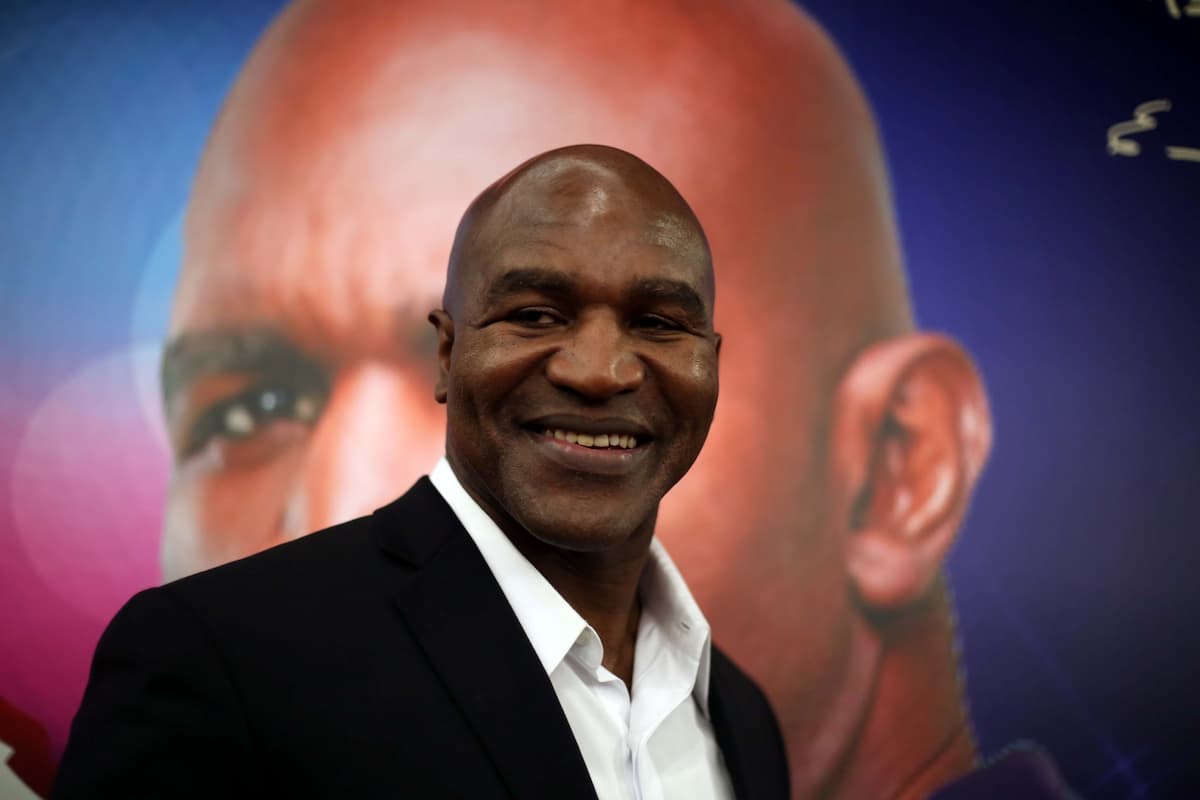
Evander Holyfield is one of boxing’s greatest modern champions. Known around the world as “The Real Deal”, he built a career on courage, discipline, fitness, and belief.
He was not always the biggest man in the ring. Yet he was often the toughest. Holyfield became the undisputed cruiserweight champion before moving up to heavyweight and making history. He then became the only boxer to win four versions of the world heavyweight title.
For more profiles and fight stories, follow our boxing coverage. Holyfield also belongs high in any debate about the greatest heavyweights of all time. His rise from cruiserweight to heavyweight also makes him a perfect name to study alongside our guide to boxing weight classes.
Early life: from Alabama to Atlanta
Evander Holyfield was born on 19 October 1962 in Atmore, Alabama. He was the youngest of nine children. His family later moved to Atlanta, Georgia, which helped shape the rest of his life.
Atlanta became the base of his boxing journey. It was where he learned discipline, structure, and the value of hard work. Holyfield did not come from wealth or comfort. Like many great fighters, he had to build himself from the ground up.
His mother played a huge role in his life. She gave him strong values and pushed him to stay focused. That foundation mattered. Holyfield would later become known not only for his talent, but also for his discipline outside the ring.
First steps in boxing
Holyfield started boxing at the Warren Memorial Boys Club when he was still a child. He was only seven years old.
At first, he was smaller than many of the boys around him. But size did not define him. Effort did. He listened, learned, and kept coming back. By the age of 13, he had already won his first tournament.
That early success gave him belief. More importantly, it showed him that boxing rewarded patience and discipline.
Holyfield was not a natural showman in the way some later stars were. He did not need loud words to prove himself. He used to work instead.
Amateur career and the 1984 Olympics
Holyfield’s amateur career showed the traits that later made him a world champion. He was fit, calm, strong, and mentally tough.
He represented the United States at the 1984 Los Angeles Olympics. Fighting as a light heavyweight, he won a bronze medal. His semi-final defeat remains one of the most debated moments of those Games, and many boxing fans still feel he was unlucky.
The result hurt, but it did not stop him. In fact, it pushed him on.
The Olympics gave Holyfield global exposure. It also gave him the platform to turn professional. His Olympic profile records his bronze medal at the 1984 Games and the controversy around that semi-final defeat.
Becoming cruiserweight king
After the Olympics, Holyfield turned professional in 1984. Many expected him to stay around light heavyweight, but he soon moved to cruiserweight.
That choice changed everything.
The cruiserweight division gave Holyfield the right stage to grow. He was not yet a natural heavyweight, but he had the frame, engine, and ambition to move through the divisions.
In 1986, he faced Dwight Muhammad Qawi for the WBA cruiserweight title. It became one of the greatest cruiserweight fights ever. Holyfield had to survive pressure, pain, and fatigue. He did. After 15 brutal rounds, he won a split decision.
That fight proved he was more than a talented prospect. He was a champion with deep reserves of courage.
Holyfield then added more titles by beating Ricky Parkey and Carlos de León. With those victories, he became the undisputed cruiserweight champion.
At that point, he had already achieved enough to be remembered. But Holyfield wanted more.
Moving up to heavyweight
In 1988, Holyfield moved to heavyweight. Not everyone believed in the move.
Critics said he was too small. They said he would not handle bigger men. They said real heavyweights would walk through him.
Holyfield heard it all. Then he proved them wrong.
He beat respected names such as Pinklon Thomas and Michael Dokes. The Dokes fight, in particular, showed that Holyfield could handle heavyweight pressure. It was fast, fierce, and punishing. Holyfield came through it like a man made for the division.
His speed became a weapon. His stamina became a weapon. His discipline became a weapon. Bigger fighters could not always match his pace or precision.
For more on the heavyweight era around him, our feature on Lennox Lewis, the last undisputed champion, covers another major figure from the same period.
Beating Buster Douglas to become the heavyweight champion
Holyfield’s first heavyweight title shot came in 1990.
His opponent was James “Buster” Douglas, who had shocked the world by beating Mike Tyson in Tokyo earlier that year. Douglas entered the Holyfield fight as heavyweight champion, but he did not look like the same fighter who had stunned Tyson.
Holyfield was sharp, prepared, and ruthless.
In the third round, Douglas threw an uppercut. Holyfield stepped back and countered with a clean right hand. Douglas went down and stayed down.
Just like that, Evander Holyfield became world heavyweight champion.
It was a huge moment. He had gone from Olympic heartbreak to cruiserweight dominance to heavyweight glory. He had also silenced the doubts about his size.
The Riddick Bowe trilogy
Holyfield’s rivalry with Riddick Bowe became one of the defining heavyweight stories of the 1990s.
Their first fight took place in 1992. Bowe was big, skilled, and hungry. Holyfield fought with heart, but Bowe won a decision and handed him his first professional defeat.
Yet Holyfield was never the kind of fighter to accept an ending like that.
In 1993, he met Bowe again. This time, Holyfield boxed with greater control and reclaimed the heavyweight title by decision. The fight is also remembered for the bizarre “Fan Man” incident, when a man using a powered paraglider crashed near the ring.
The third fight came in 1995. Bowe stopped Holyfield, but the trilogy had already secured its place in boxing history.
It had everything: skill, drama, momentum swings, pride, and pain.
The Mike Tyson fights
Holyfield’s most famous rivalry came against Mike Tyson.
By 1996, many people thought Tyson would be too strong. Holyfield was seen as faded by some observers. Tyson was still feared. He had power, menace, and global star status.
But Holyfield did not fear him.
In their first fight, Holyfield shocked the world. He stood his ground, pushed Tyson back, and broke him down. In the 11th round, the referee stopped the fight. Holyfield had beaten Tyson and become heavyweight champion again.
It was one of the great upset wins of the 1990s.
The rematch in 1997 became infamous. Tyson bit Holyfield’s ear and was disqualified. The moment became one of the most shocking scenes in sports history.
Sadly, that incident often overshadows what came before it. Holyfield had already shown in the first fight that he could beat Tyson with strength, tactics, and nerve.
Facing Lennox Lewis
In 1999, Holyfield faced Lennox Lewis for the undisputed heavyweight championship.
Their first fight ended in a controversial draw. Many observers felt Lewis had done enough to win. The result caused major debate and led to an immediate rematch.
In the second fight, Lewis won by decision. It was a clear passing-of-the-torch moment in the heavyweight division. Holyfield remained proud and dangerous, but Lewis had become the leading heavyweight of that era.
Still, Holyfield’s willingness to face Lewis said plenty about him. He did not avoid the biggest fights. He chased them.
Later career and retirement
Holyfield continued boxing long after most champions would have walked away.
He fought into his forties and still found ways to compete with younger men. That showed both his pride and his remarkable fitness. However, it also raised questions about how long great fighters should continue.
He finally retired with a professional record of 44 wins, 10 losses and two draws. Britannica lists that final record and notes his 2017 induction into the International Boxing Hall of Fame. Britannica’s Holyfield biography also records his unique status as the only fighter to win the heavyweight championship four separate times.
What made Evander Holyfield great?
Holyfield was great because he could adapt.
At cruiserweight, he was strong, fast, and relentless. At heavyweight, he had to be smarter. He could not always rely on size. So he used movement, timing, conditioning, and will.
He had a strong jab, fast combinations, and excellent inside fighting. He could box at range or trade up close. He also had one of the best engines in heavyweight boxing.
But his greatest strength was his mind.
Holyfield never seemed shocked by hard moments. He could be hurt, tired, or behind, yet still find a way back into the fight. That made him dangerous to anyone.
He was not perfect. He could be drawn into wars. He sometimes took more punishment than he needed to. But fans loved him because he never looked for the easy route.
Life outside the ring
Away from boxing, Holyfield became a well-known public figure. He appeared on television, in video games, and across popular culture.
His name carried weight beyond sport. During the 1990s, he was one of the most recognisable athletes in the world. His rivalry with Tyson made him a household name, but his wider career gave him lasting respect.
Holyfield has also spoken often about faith, discipline, and perseverance. Those themes shaped his image. He was not only a fighter. He was a symbol of resilience.
Evander Holyfield’s legacy
Evander Holyfield’s legacy is secure.
He was the undisputed cruiserweight champion. He became the undisputed heavyweight champion. He beat legends, survived setbacks, and kept returning when people counted him out.
His career included Buster Douglas, George Foreman, Larry Holmes, Riddick Bowe, Mike Tyson, Michael Moorer, Lennox Lewis, John Ruiz, and many others. That list alone shows the depth of his era.
Holyfield’s greatest achievement may be that he carried his cruiserweight ambition into the heavyweight division and made it work. He did not just move up. He conquered.
He was smaller than many heavyweights, but he fought with huge belief. He was not always the favourite, but he was rarely broken. He won titles, lost them, and came back again.
That is why fans still call him The Real Deal.
Conclusion: Why The Real Deal still matters
Evander Holyfield’s story is one of discipline, courage, and refusal.
From a young boy in Atlanta to Olympic medallist, from cruiserweight champion to four-time heavyweight titleholder, he built one of boxing’s most remarkable careers.
He gave fans classic fights. He faced the best names of his time. He proved that size is not everything when skill, stamina, and heart are elite.
Holyfield was not just a champion. He was a fighter’s fighter.
And in boxing history, “The Real Deal” remains exactly that.
Beat Tyson twice!
Beat Tyson twice!
Beat Tyson twice!