
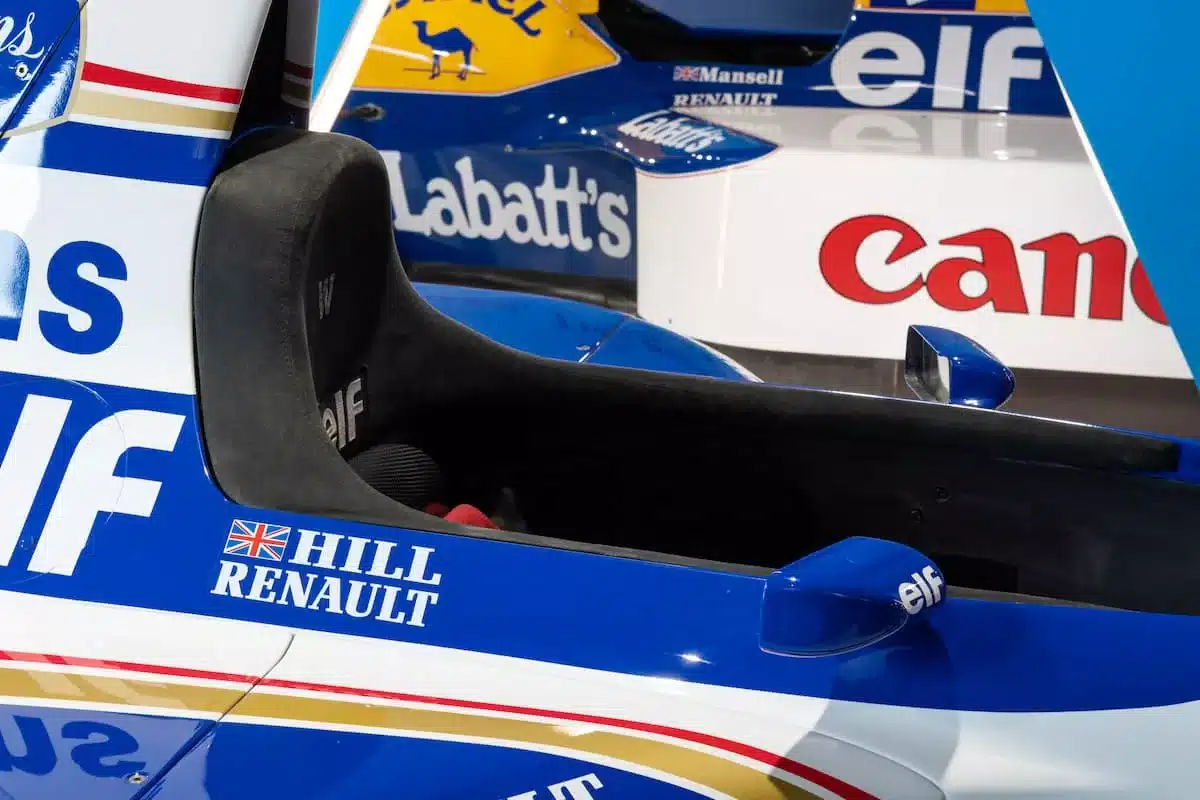
The history of the Williams F1 team is very much a sleeping giant of Formula 1. This is the start of a series that will attempt to tell this incredible story of incredible highs and heartbreaking lows. On a personal note, the Williams F1 team is my favourite team by far.
Many people forget the foundations of many sports. The Williams F1 team is a pillar of this sport, having been there in its highest days and lowest. They have pioneered major developments throughout its history.
It is hard to talk about Formula 1 without mentioning Drive to Survive. However, while Drive to Survive has increased engagement with the sport, it has also brought in a fanbase that doesn’t know the story of the Williams F1 team. Many new fans only know the F1 grid from where they were when the show started.
Many of these new fans of the sport will only know Williams as a back marker or the team that helped develop George Russell. Williams’s story is without a doubt one of the most fascinating stories in sports. This article will be the start of a series telling the team’s story.
Embed from Getty ImagesThe Roots of the Williams Team
If you love sports, business, underdogs, etc., there will be a part of the Williams story that you can resonate with. Many people forget that sport is not just about turning up; it’s about actually being able to turn up.
As with any story, the best place to start would be when Frank Williams formed a team called Frank Williams Racing Cars in 1966. Frank Williams was obsessed with racing, and when he figured that he wasn’t fast enough, the next best thing was creating his own. So, in 1966, Frank Williams used his savings from his low-paid job to found Frank Williams Racing.
The team itself started the journey that would create one of the giants of F1. The journey here was tough, with Frank Williams having to use every resource that he could to lower the cost of the team. He made calls from a phone box in the street, for example, because the factory cost too much to pay bills. By 1976, 60% of the team was bought by a Canadian businessman, which eventually forced Frank Williams out of his team.
The Creation of the Williams F1 Team
However, as we know, the Williams F1 and Frank Williams Racing Cars are two different things. By 1977, Frank had decided to pick himself up again and create the team we know today. This time, Frank Williams brought a friend named Patrick Head along. Patrick Head would become a massive name in the sport and known as somewhat of a genius in engineering.
In 1977, Williams entered a “March 761.” In their first season, Williams competed in 11 of the 17 races. Their first race was the fifth-round race in Spain. They ran one driver this season and failed to score any points.
1978
It would be 1978 when Williams would have their first full season. This would be their first season, during which they would design their first car. Patrick Head, who helped build the car in a carpet warehouse. They were based in Oxfordshire and only had 17 people employed in the business. As we are aware, money is crucial in F1. Frank knew this and would seek to gain a wealthy sponsor to gain some extra income.
Frank drew on his past sales jobs to sell the Williams racing dream to a wealthy Saudi investor. He knew that the owners of Fly Saudi were staying at a London Hotel. Selling the dream and showing the dream are two different things. When the Saudi businessman left the hotel, he saw his business plastered on the F1 car parked outside of the hotel. This was enough to persuade the businessman to invest in the team. As a result of this, the finances of the team were more secure, and as a result, Frank and Patrick could focus on racing.
Embed from Getty ImagesThey would run a Ford Cosworth engine. They would also sign driver Alan Jones. Alan Jones was a proven race winner, winning the Austrian GP the year before. The season started poorly. The team did not finish the first two races. Come 3rd round in South Africa, Williams would finish their first race of the season. Alan Jones would qualify in 18th and climb into 4th position.
Williams scored the first three points of its history. Later in the season, Alan Jones brought the team its first podium in the USA East GP. The team’s season would mostly consist of DNFs, however, and it would finish in a respectable 9th place in the constructors and 11th in the drivers standings.
1979
1979, the team brought on Clay Regazzoni to assist Alan Jones. The team would continue to run the colours of Fly Saudi. Apart from the livery, that was the only resemblance to the 1978 car. 1979 would rocket Williams Ford into podium sitters and winners.
Within four rounds, Alan Jones would score Williams’s first podium of the season, finishing in third place. Jones would leave it late to get into third place, getting the job done in the 62nd lap. Williams had a steady season up until the British GP. This is where the Williams story gets into top gear. The team brought major upgrades to the car and fixed its aerodynamic issues.
Both Williams cars got off to a lightning start, with Jones taking the lead in the first lap. Regazzoni would move into second come lap 17. Williams’s race was going incredibly well at their home GP as well. However, Jones would retire on lap 39. All was not lost, as Regazzoni was in second. Regazzoni stormed into the lead, giving Frank Williams his first Formula 1 win.
After the team’s start, it could have been easy to say their win was going to be short-lived. However, Williams’s chief of aerodynamics, Frank Dernie, had made improvements to the car’s aerodynamics, developing the car’s skirts so that downforce was greater, allowing the car to move better through corners. Williams would go through the second half of the season, winning 5 of a possible 7 races. Alan Jones would win 4 of these.
Embed from Getty ImagesThe next round in Germany would provide the team with their first 1-2. Three rounds later, the Italian GP would end the team’s four-race win streak. Not all was lost, though, as Regazzoni claimed third place against the strong-running Ferraris. Enzo Ferrari had previously called the Williams F1 team a garagiste team, which means a small team built on limited supplies.
It’s not an “actual” F1 team in terms of professionalism. So, getting a win at the Ferrari home race would have been a real kick in the teeth. By the end of the season, the team won 5 races, earning them second place in the constructors’ championship.
1980
1980 would be a massive year for the team. They would win their first drivers and constructors championship. They would bring in Carlos Reutemann to partner Alan Jones. The car had been designed for absolute downforce and improved suspension. It was these improvements that ultimately fired Williams into a leading team.
Alan Jones would win the first race of the season despite the race nearly being called off. The developments in car downforce meant that the cars were so close to the ground that when the track was hot, it would start cracking and coming up due to the suction that the cars were creating. Despite this, the Williams car overcame this and won the race.
This would also be the first race of a young French rookie called Alain Prost. Willaims would continue to have a strong and consistent season but would have to wait until round 6 for their successive win. Reutemann would win his first race in Monaco. He would win by an incredible 1 minute and 13 seconds.
Alan Jones would retire on lap 24. This would not take away from the fact that in just a handful of seasons, the Williams F1 team had won a classic in the F1 calendar. The team would go on to win another two races after this to create a three-win-race streak. The team would again win their home GP, finishing 1st and 3rd. It would be a thrilling race, with Jones climbing from 3rd place to win the race by 11 seconds after taking 1st within 31 laps.
This would be an important race for Jones for his driver’s championship as he doubled his lead over Nelson Piquet. After the British GP, the team would not win another race until the final two rounds. By the end of the season, Williams finished with 120 points, with second place 54 points behind.
1981
1981 would be a big season for the business side of Formula 1. The Concorde agreement was put into place to ensure that F1 became a profitable business.
This year’s season would officially start at the United States West Grand Prix. While the season was supposed to start in South Africa, it was stripped of its championship status due to an ongoing war. The regulations had changed this year, with cars having to be at least 6cm off the ground to reduce the power of downforce and sliding skirts to slow cars in the corner.
Their season it started well despite getting lucky by benefiting from a reliability issue on Villenueve’s Ferrari. For the Williams F1 team, this meant that Jones would lead the team to yet another 1-2. In Brazil (round 2), this sparked drama in the team.
Team orders were put into place, and Reutemann was told to move over to let Jones through. Every way possible to tell a driver was used, but Reutemann did not move and ended up winning the race and overtaking the two Talbot Liegers. Jones would finish 2nd by 4.4 seconds and not take part in the podium ceremony.
Round 3 in Argentina, Reutemann’s home race, showed tension in the Williams team after he disobeyed team orders. Reutemann finished second, and Jones finished a lousy fourth.
Round 4 in Belgium would bring back a win to a deprived Williams team. The Brabham team was mounting an early challenge for the championship despite many complaints about their car not following the new 1981 regulations.
New regulations would also be brought up after the tragic death of a pit crew for another team after Reutemann collided with them in the pits. Questions were raised about the safety of the pit lane as it was thought they were too overcrowded.
Controversy would continue into the race as the drivers struck for better safety measures for team staff. At the start of the race, a mechanic ran onto the track to start a stalled car just as the button was pressed for the green light. This left the mechanic unconscious in the middle of the track after being run over. By the second lap; marshals were waving the flags to bring the drivers back to the grid without the clerk’s permission. By lap three, the drivers were back in the pit.
Later in the race, Jones would crash out after being in a near physical fight in the pits a few laps before with Piquet. Reutemann would win the race despite it being called off early due to heavy rain.
Williams would go on another dry patch for wins. Potential wins in both Monaco and Germany were squandered due to fuel misfiring issues. Their 4th and final win came at the season finale in Las Vegas.
Williams F1 team would win their second constructors championship, scoring 95 points. Early competitor Brabham finished second with 61 points. As for the driver’s championship, Reutemann finished second by just 1 point to Brabhams Piquet. Jones finished third.
Embed from Getty Images1982
The 1982 season would see the retirement of Williams legend Alan Jones. Keke Rosberg would replace him. This would leave the driver pairing as Reutemann and Rosberg. This year, the car will focus on adapting to the 6cm rule with a shorter wheelbase. This would also be the year of the super licence’s introduction. Cars also suffer from turbo lag, which is when there is a lag between putting on full throttle and the full power of the car coming out.
Embed from Getty ImagesThe first race of the season would be an indicator of the difficulty of the season. In South Africa, Rosberg would qualify 7th, with Reutemann in 8th. The race would prove a different story, with Reutemann climbing up to 2nd and Rosberg into 6th. This was partly due to some drivers ahead not finishing the race, most notably Piquet, who spun off.
Round 2 in Brazil would be poor, with Rosberg disqualified and Reutemann forced to retire due to a collision.
Round 3 would bring another new driver to the team as Reutemann would retire. Williams F1 team would bring in the soon-to-be legendary Mario Andretti. Rosberg would finish 2nd, and Andretti would be forced to retire.
A few races later, in Belgium, Rosberg would record another second-place finish, putting him third in the drivers’ championship. Also, for the Belgium Grand Prix, Andretti was replaced by Derek Daly, who retired on lap 60. Andretti had commitments in the US to fulfil, and it was only a temporary option.
It wouldn’t be until round 9 that Williams would get another podium. Rosberg would climb from 7th to 3rd place, putting him third in the drivers’ standings and Williams third. McLaren was taking the constructors by storm, charging 10 points clear of Ferrari and 13 ahead of Williams.
The next race at the British GP saw Rosberg get his first pole position on the team, but due to a fuel failure, he would not finish the race. Williams’s winless run continued as their hopes of winning a third consecutive championship fell away. Derek Daly continued his average but consistent run, finishing in 5th place.
By the next round in France, Rosberg was down to 5th in the driver’s constructors and 16 points off the top.
Round 12 in Germany would bring another much-needed podium for Williams and Rosberg. Daly suddenly retired due to engine issues. After this round, Rosberg was up to 3rd in the driver’s standings.
Rosberg would finish second in the next round in Austria. Fellow driver championship hopefuls crumbled, with second-place John Watson retiring and leading driver Pironi dropping out due to injury back in round 11. This race put Rosberg into second, leapfrogging Watson.
Things could only get better for Williams and Rosberg. The Swiss GP offered a lifeline of some form of success for the team. Rosberg would win the race despite qualifying 8th. This would fire him into 1st in the drivers. It is an incredible drive to give the team some hope. Daly continued to be average and finished 9th.
Embed from Getty ImagesA couple of races later in Las Vegas, the season was over. Williams’s painful season ended with Rosberg winning the driver championship. It has been a season of ups and downs. Rosberg’s reliability was crucial to his championship win. Unfortunately, in terms of the constructors, the Williams F1 team was no match for Ferrari, McLaren, and Renault.
This was not helped by Daly’s average drive, which simply made too many mistakes. Rosberg was an important, if not crucial, part of the team, which allowed them to still be a competitive racing team.
Next Time
The next part of this series will follow shortly. In it, we will delve into Williams’s decline and continue to observe the team’s fascinating history.
Image Credit: Deposit Photos
Excellent article, enjoyed reading that